



About Edexcel A Level English Literature
Edexcel A Level English Literature is code 9ET0, and its full title is the Pearson Edexcel Level 3 Advanced GCE in English Literature. First teaching was September 2015 and first certification was 2017. This page works from Issue 11, dated August 2025.
The qualification consists of three externally examined papers and one non-examination assessment component. It requires the study of eight literary texts plus unseen poetry, and students must complete all assessment in May and June in any single year.
The eight texts are not free choice across the whole course. Three of them have to be pre-1900 texts, including one Shakespeare play, and there must also be one text first published or performed post-2000. The specification sets out how the eight are reached: one Shakespeare play and one other drama play in Component 1, one pre-1900 prose fiction text and one prose fiction text in Component 2, one post-2000 specified poetry text and one specified poetry text from a pre- or post-1900 period in Component 3, and two free choice texts in the non-examination assessment.
Paper 1 is where the text choice starts, and both lists are fixed. For Shakespeare, students take one play from either the tragedy list or the comedy list. The tragedies are Antony and Cleopatra, Hamlet, King Lear and Othello, and the comedies are A Midsummer Night's Dream, Measure for Measure, The Taming of the Shrew and Twelfth Night. The other drama play comes from a separate list of eight. Before 1900 there are Doctor Faustus by Christopher Marlowe, The Duchess of Malfi by John Webster, The Importance of Being Earnest by Oscar Wilde and The Rover by Aphra Behn. After 1900 there are Les Blancs by Lorraine Hansberry, A Streetcar Named Desire by Tennessee Williams, Sweat by Lynn Nottage and Waiting for Godot by Samuel Beckett.
The critical reading behind the Shakespeare essay is supported by a Pearson anthology, and the specification describes what is inside it. Each anthology contains four general essays and three essays on each set text, and taking either the Tragedy or the Comedy edition fulfils the requirement to engage with different readings of the play. Centres are also free to add other criticism on their chosen play.
There is a rule about where the pre-1900 texts must sit, and it is easy to trip over. If the other drama play chosen for Paper 1 is not pre-1900, then a pre-1900 text must be selected in either Paper 2 Prose or Paper 3 Poetry instead. So a student who picks Waiting for Godot has to take a pre-1900 prose text or a pre-1900 poetry option to keep the balance right. The requirement is three pre-1900 texts across the whole qualification, one of which is Shakespeare.
Paper 2 is chosen from six themes, and each theme offers four texts, two from before 1900 and two from after. Under Childhood the older texts are Hard Times by Charles Dickens and What Maisie Knew by Henry James, with Atonement by Ian McEwan and The Color Purple by Alice Walker as the newer pair. Under Colonisation and its Aftermath they are The Adventures of Huckleberry Finn by Mark Twain and Heart of Darkness by Joseph Conrad, with Home Fire by Kamila Shamsie and The Lonely Londoners by Sam Selvon. Under Crime and Detection they are Lady Audley's Secret by Mary Elizabeth Braddon and The Moonstone by Wilkie Collins, with The Cutting Season by Attica Locke and In Cold Blood by Truman Capote.
The remaining three prose themes follow the same pattern. Under Science and Society the older texts are Frankenstein by Mary Shelley and The War of the Worlds by H G Wells, with The Handmaid's Tale by Margaret Atwood and Never Let Me Go by Kazuo Ishiguro as the newer pair. Under The Supernatural they are Dracula by Bram Stoker and The Picture of Dorian Gray by Oscar Wilde, with Beloved by Toni Morrison and The Little Stranger by Sarah Waters. Under Women and Society they are Tess of the D'Urbervilles by Thomas Hardy and Wuthering Heights by Emily Bronte, with Mrs Dalloway by Virginia Woolf and A Thousand Splendid Suns by Khaled Hosseini.
Paper 3 Section A draws on Poems of the Decade: An Anthology of the Forward Books of Poetry, covering the years 2002 to 2011. Section B is chosen from six options, and each one can be taken either as a period anthology or as a single named poet. The Medieval Period offers Everyman and Medieval Miracle Plays edited by A C Cawley, or Geoffrey Chaucer's The Wife of Bath's Prologue and Tale. The Metaphysical Poets offers the Colin Burrow anthology, or John Donne's Selected Poems. The Romantic Period offers English Romantic Verse edited by David Wright, or Selected Poems by John Keats. The Victorian Period offers The New Oxford Book of Victorian Verse edited by Christopher Ricks, or Christina Rossetti's Selected Poems. Modernism offers The Great Modern Poets edited by Michael Schmidt, or T S Eliot's Selected Poems. The Movement offers The Oxford Book of Twentieth Century English Verse edited by Philip Larkin, or Philip Larkin's The Less Deceived.
The coursework has no prescribed texts at all, and the freedom is wider than most students expect. There are no genre or date restrictions, but texts in translation are not allowed. Centres may also draw on texts named elsewhere in the specification that they have not chosen for the examined papers, so a text taught to another class in the same centre is fair to use.
Paper 1 is Drama, code 9ET0/01, worth 30% of the total qualification. It is a written examination lasting 2 hours 15 minutes with a total of 60 marks available, 35 marks for Section A and 25 marks for Section B. It is open book, and clean copies of the prescribed drama texts can be taken into the examination, but copies of the Critical Anthologies must not be taken in. There are 32 questions and students answer two of them.
The two sections test different things. Section A is Shakespeare: one essay question from a choice of two on the studied text, incorporating ideas from wider critical reading, assessing AO1, AO2, AO3 and AO5. Section B is Other drama: one essay question from a choice of two on the studied text, assessing AO1, AO2 and AO3. The wider critical reading behind Section A is supported by Shakespeare: A Critical Anthology, in either the Tragedy or the Comedy edition.
Paper 2 is Prose, code 9ET0/02, worth 20%. It is a written examination lasting 1 hour 15 minutes with a total of 40 marks available, and it is open book, with clean copies of the prescribed prose texts allowed in. There are 12 questions and students answer one: one comparative essay question from a choice of two on their studied theme, assessing AO1, AO2, AO3 and AO4. Students study two prose texts from a chosen theme, and at least one of those prose texts must be pre-1900.
Paper 3 is Poetry, code 9ET0/03, worth 30%. It is a written examination lasting 2 hours 15 minutes with a total of 60 marks available, 30 marks for Section A and 30 marks for Section B, and it is open book with clean copies of the prescribed poetry texts allowed in. There are 26 questions, and students answer one question from a choice of two and then one question from a choice of 24.
The two poetry sections carry different objective sets. Section A is Post-2000 Specified Poetry: one comparative essay question on an unseen modern poem written post-2000 and one named poem from the studied contemporary text, assessing AO1, AO2 and AO4. Section B is Specified Poetry Pre- or Post-1900: one essay question from a choice of two on the studied text, assessing AO1, AO2 and AO3. The content is poetic form, meaning and language, a selection of post-2000 specified poetry, and a specified range of poetry taken either from a literary period, pre- or post-1900, or from a named poet within a literary period.
The fourth component is the non-examination assessment, code 9ET0/04, worth 20%. It is internally assessed and externally moderated, with first moderation in 2017. Students have a free choice of two texts, but those texts must be different from those studied in Components 1, 2 and 3. They must be complete texts and may be linked by theme, movement, author or period, and they may be selected from poetry, drama, prose or literary non-fiction.
The coursework is one assignment: one extended comparative essay referring to two texts, assessing AO1, AO2, AO3, AO4 and AO5. The advisory total word count is 2500 to 3000 words. There is a total of 60 marks available, and assignments must be submitted at the end of the course.
The assessment objectives are five. AO1, articulate informed, personal and creative responses to literary texts, using associated concepts and terminology and coherent, accurate written expression, is 26.7 per cent. AO2, analyse ways in which meanings are shaped in literary texts, is 26.7 per cent. AO3, demonstrate understanding of the significance and influence of the contexts in which literary texts are written and received, is 21.9 per cent. AO4, explore connections across literary texts, is 14 per cent. AO5, explore literary texts informed by different interpretations, is 11 per cent. The specification notes that some totals have been rounded either up or down.
The breakdown reveals a deliberate design, and it is the most useful thing on the page. Paper 1 Drama is 7.8% on each of AO1, AO2 and AO3, nothing on AO4 and 6.9% on AO5. Paper 2 Prose is 5% on AO1, AO2, AO3 and AO4, and nothing on AO5. Paper 3 Poetry is 9.9% on AO1 and AO2, 5.1% on AO3 and AO4, and nothing on AO5. The non-examination assessment is 4% on each of the five objectives.
AO4, exploring connections across literary texts, is worth nothing at all on Paper 1. That is not an omission: Paper 1 is the one component with no comparative task, so there is no cross-text connection to examine. Every component that does ask for comparison carries AO4, which is Paper 2 at 5%, Paper 3 Section A at 5.1%, and the coursework at 4%.
AO5, exploring texts informed by different interpretations, works the other way round. It is assessed only on Paper 1 and in the coursework. Both the Shakespeare essay and the comparative coursework essay carry it, so the two places a student engages with how others have read the text are the two places it is marked.
The qualification is graded and certificated on a six grade scale from A* to E using the total subject mark, and individual components are not graded. The first certification opportunity was 2017, and students whose level of achievement is below the minimum judged by Pearson to be of sufficient standard receive an unclassified U result.
On codes: the qualification number is 601/5046/4 and the subject code is 9ET0. The component codes are 9ET0/01, 9ET0/02, 9ET0/03 and 9ET0/04. No discount code number is printed in this specification. Appendix 3 states only that discount codes are published by DfE and points to the GOV.UK website.
Who Edexcel A Level English Literature 9ET0 Is For
This course suits students sitting Edexcel A Level English Literature 9ET0 who need the eight texts planned as one course, because each component tests a different pair of skills and one objective is absent from the drama paper entirely.
- Students sitting Edexcel A Level English Literature 9ET0
- Students who have not checked that their coursework texts differ from the examined ones
- Students who do not yet know which critical anthology their Shakespeare play needs
- Students who lose the unseen poetry comparison by ignoring the unseen poem
- Students who write about texts in isolation when the task asks for connections

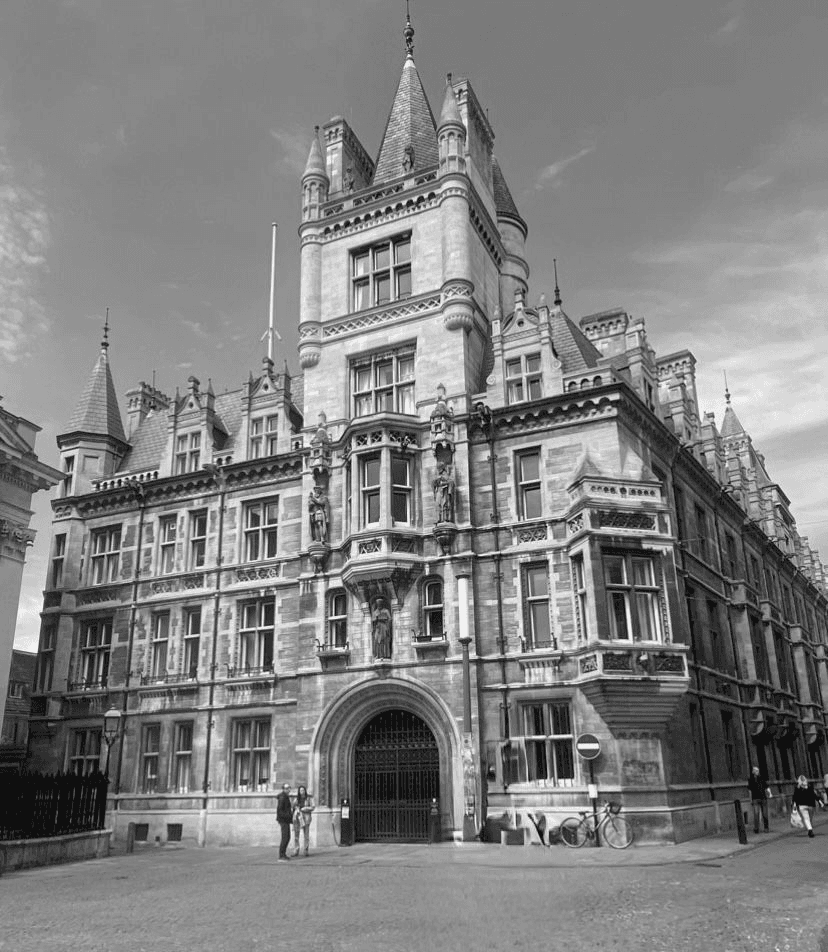

Edexcel A Level English Literature: The Board We Cover
Edexcel is the board this page covers. Every fact here comes from Pearson's own 9ET0 specification, Issue 11.
Edexcel
Edexcel's A Level English Literature is code 9ET0, three open book papers at 30%, 20% and 30% plus a 20% coursework essay, covering eight texts and unseen poetry.

How Centaurus Helps Edexcel A Level English Literature Students Excel
All Eight Texts Planned
Three pre-1900 including one Shakespeare play, one post-2000, and two free choice for coursework, mapped before teaching starts.
The Objectives Mapped to Components
AO4 is absent from Paper 1 and AO5 is absent from Papers 2 and 3, so each skill is taught where it is marked.
Comparison Taught Where It Counts
Paper 2, Paper 3 Section A and the coursework all require connections across texts, and each is practised as a comparison rather than two essays.
Interpretations Honoured
AO5 is 11 per cent and sits only on the Shakespeare essay and the coursework, so critical reading is treated as an examined skill.
The Unseen Poem Handled
Paper 3 Section A pairs an unseen post-2000 poem with a named studied poem, so reading an unseen text quickly is drilled.
24/7 Progress Reporting
Families get access to the Centaurus Academy LMS, with attendance, progress and lesson notes available to parents, students and teachers at any time.



Why Centaurus Stands Out
Choosing the right Edexcel A Level English Literature support makes a real difference. Here is how Centaurus Academy compares with typical online providers.

Meet our Team Of Experts
Our expert tutors bring deep subject knowledge and a passion for teaching — helping every student reach their full potential.


What Parents Say About Us

Hear from the parents and students who have experienced our personalised teaching first-hand.
Excellent long-term experience
We have an excellent long-term experience with the academy and Sir Awais. Our three children studied with them during different periods and succeeded well. We highly recommend the academy.
Excellent academy
Centaurus Academy is truly one of the best educational institutions I've come across. The environment is nurturing, the staff are incredibly dedicated, and the quality of education is outstanding. They focus not only on academic excellence but also on character building and personal growth. The teachers are supportive and go the extra mile to ensure every student feels confident and motivated.
My child has gained confidence
I'm very satisfied with the dedication and teaching approach. My child has gained confidence and improved significantly in understanding math concepts, thanks to the teacher's clear explanations and supportive guidance.



Edexcel A Level English Literature: Frequently Asked Questions
Explore Tutoring by Country:
Pick your country to see the boards, levels, and subjects our tutors cover near you.




Step Into Your Success
Book a demo lesson today and see how one-on-one tutoring can help your child reach their goals.