



About Cambridge O Level Literature in English
Cambridge O Level Literature in English is syllabus 2010. All candidates take two components and all candidates are eligible for grades A* to E. The grade range stops at E, and anything below it is ungraded. There is no Core and Extended tier.
This qualification is changing, and the change matters before a single text is chosen. Candidates sitting in 2027 take one structure. Candidates sitting in 2028 or later take a different one, with different paper names, a different paper length, and a different approach to bringing texts into the exam. This page explains both, so it stays useful whichever year a student sits.
Under the 2027 structure, Paper 1 is Poetry and Prose and Paper 2 is Drama. Both last 1 hour 30 minutes, both carry 50 marks and both are worth 50% of the qualification.
Under the structure for 2028 onwards, Paper 1 becomes Poetry and Prose (Open text) and still lasts 1 hour 30 minutes with 50 marks and 50%. Paper 2 becomes Drama and Unseen (Open text), grows to 2 hours, and still carries 50 marks and 50%. So the second paper gets longer and now includes an unseen element that did not exist before.
The other change is the one students feel most. The 2027 papers are closed book: candidates may not take their set texts into the exam room, and relevant passages and poems are printed on the question paper instead. From 2028 both papers are open text, and candidates may take a copy of the selected text in with them.
The open text rules from 2028 are specific and worth knowing word for word. Sticky notes are not allowed, and there should be no other separate pieces of paper in the set texts. Candidates may use highlighting, underlining or brief handwritten notes to make it easier to navigate to the essential elements of the text. Texts that already contain printed editor notes and commentaries may be used, but that work of others should be quoted and referenced appropriately, and passing it off as the candidate's own would be plagiarism.
On question structure, the 2027 papers work like this. Paper 1 is two questions, one from Section A on Poetry and one from Section B on Prose, all carrying equal marks at 25 marks each, with a choice of two questions on each text. Paper 2 is two questions on two texts, also at 25 marks each, with a choice of a passage-based question or an essay question on each text, and candidates must answer one passage-based question and one essay question.
That last rule catches people out. On the 2027 Paper 2 a candidate cannot answer two essays, and cannot answer two passage-based questions. One of each is required, so both skills have to be practised rather than one being leaned on.
From 2028 the pattern becomes one question from Section A and one from Section B on each paper, each worth 25 marks. On Paper 1, Section A is Poetry, where the poems named in the questions are printed in the paper and a candidate answers one question from a choice of two on the chosen text, and Section B is Prose, where there are two essay questions on each text and the questions require knowledge of the whole text. On Paper 2, Section A is Drama with relevant passages printed, and Section B is Unseen, where a candidate answers one question from a choice of two.
So the 2028 candidate studies one drama text rather than two, but also has to handle an unseen poem or prose extract, and can take the book in. That is a different skill balance from 2027, where two plays are examined in the same paper and no text is allowed in.
The set texts are the substance of this course, and they are listed by year. The syllabus warns that set texts regularly rotate and may change from one year of examination to the next, and that the list must be checked for the year in which the candidate actually sits. Where an edition is not specified, any edition may be used provided it is not an abridgement or a simplified version.
For 2027, Paper 1 Section A Poetry offers three options and a candidate answers on one. The first is 15 poems from Songs of Ourselves Volume 1: Aphra Behn, Song: Love Armed; Sujata Bhatt, A Different History; William Blake, The Chimney-Sweeper; Elizabeth Brewster, Where I Come From; Boey Kim Cheng, Report to Wordsworth; Gillian Clarke, Lament; Kevin Halligan, The Cockroach; Seamus Heaney, Follower; Liz Lochhead, Storyteller; Charles Mungoshi, Before the Sun; Katherine Philips, A Married State; Alexander Pope, from An Essay on Man; Carol Rumens, Carpet-weavers, Morocco; William Shakespeare, Sonnet 18; and Judith Wright, Hunting Snake.
The second 2027 poetry option is 15 poems from Songs of Ourselves Volume 2, Part 3: Nancy Fotheringham Cato, The Road; Sarah Jackson, The Instant of My Death; Arun Kolatkar, The Bus; Julius Chingono, At the Bus Station; Imtiaz Dharker, These are the Times We Live in; Elizabeth Jennings, The Enemies; Sampurna Chattarji, Boxes; W H Auden, The Capital; Arthur Yap, an afternoon nap; Elizabeth Smither, Plaits; Elizabeth Daryush, Children of Wealth; Thomas Love Peacock, Rich and Poor or, Saint and Sinner; Musaemura Zimunya, A Long Journey; Stevie Smith, Touch and Go; and George Szirtes, Song.
The third 2027 poetry option is 15 poems by Kayo Chingonyi from Kumukanda: The Colour of James Brown's Scream, Broomhall, The N Word (I.), Waves, A Proud Blemish, Andrews Corner, 'Round Midnight, Fisherman's Song, Some Bright Elegance, Curfew, Kumukanda, Grief, Kung'anda, Baltic Mill, and This poem contains gull song.
For 2027 Paper 1 Section B, Prose, the list offers seven whole books and one anthology. The books are Things Fall Apart by Chinua Achebe, What it Means When a Man Falls from the Sky by Lesley Nneka Arimah, Pride and Prejudice by Jane Austen, Fire on the Mountain by Anita Desai, Hullaballoo in the Guava Orchard by Kiran Desai, I'm the King of the Castle by Susan Hill, and To Kill a Mockingbird by Harper Lee. The eighth option is 10 stories from Stories of Ourselves Volume 2: Nick by Christina Rossetti, The Woman's Rose by Olive Schreiner, The Black Ball by Ralph Ellison, The Gold Watch by Mulk Raj Anand, When It Happens by Margaret Atwood, The Man Who Walked on the Moon by J G Ballard, A Walk to the Jetty by Jamaica Kincaid, Showing the Flag by Jane Gardam, Haywards Heath by Aminatta Forna, and Fluke by Romesh Gunesekera.
For 2027 Paper 2, Drama, candidates must answer on two different set texts from a list of five: Blues for an Alabama Sky by Pearl Cleage, A Taste of Honey by Shelagh Delaney, Princess and the Hustler by Chinonyerem Odimba, A Midsummer Night's Dream by William Shakespeare, and Antony and Cleopatra by William Shakespeare. Because two different texts are required, a student cannot specialise in one play and hope it carries the paper.
From 2028 the lists are published year by year, so 2028, 2029 and 2030 each have their own. It is worth knowing what changes in 2028, the first year of the new design. The 15 poems from Songs of Ourselves Volume 1 and the 15 poems from Kumukanda both carry over unchanged, but the second poetry option changes from Volume 2, Part 3 to 15 poems from Songs of Ourselves Volume 3, which include John Clare's Insects, Alice Oswald's Fox, William Wordsworth from The Prelude, Moniza Alvi's My Aunts Don't Want to Move, William Shakespeare's Sonnet 106, Romalyn Ante's Ode to a Pot Noodle, Les Murray's The Widower in the Country and Ifi Amadiume's Mistress of My Own Being.
The 2028 prose list drops Fire on the Mountain and To Kill a Mockingbird and adds When We Were Birds by Ayanna Lloyd Banwo and Brooklyn by Colm Toibin, and the anthology option moves to 10 stories from Stories of Ourselves Volume 3, including Thomas Hardy's Tony Kytes, the Arch-Deceiver, Kate Chopin's A Pair of Silk Stockings, Ray Bradbury's The Flying Machine, Sam Selvon's The Cricket Match, David Lodge's The Man Who Wouldn't Get Up, Anita Desai's Sale and Patricia Grace's Fishing.
The 2028 drama list drops A Taste of Honey and both Shakespeare plays from the 2027 list, and adds An Inspector Calls by J B Priestley, The Tempest by William Shakespeare, and The Importance of Being Earnest by Oscar Wilde, alongside Blues for an Alabama Sky and Princess and the Hustler, which carry over. And because 2028 candidates study one drama text rather than two, a school choosing a play is choosing the only one that student will write about.
The assessment objectives are four and they do not change between the two designs. AO1 is showing detailed knowledge of the content of literary texts in the three main forms of drama, poetry and prose, supported by reference to the text. AO2 is understanding the meanings of literary texts and their contexts, and exploring texts beyond surface meanings to show deeper awareness of ideas and attitudes. AO3 is recognising and appreciating the ways in which writers use language, structure and form to create and shape meanings and effects. AO4 is communicating a sensitive and informed personal response to literary texts.
The weightings are also unchanged. AO1, AO2, AO3 and AO4 are each 25 per cent of the qualification, and the per component tables are the same for both papers under both designs. There is no paper where recall counts for more than response.
The 2028 design adds a useful definition that earlier candidates did not get. It explains that a personal response means expressing what the text means to the candidate in response to the task, and that informed means referring closely to the text in justifying those interpretations. That is a fair description of what all four objectives have always wanted, and it is a good standard for any year.
The qualification is graded A*, A, B, C, D or E, with A* the highest and E the lowest. A candidate whose performance does not meet the standard required for grade E is ungraded, which is reported on the statement of results but not on the certificate.
Who Cambridge O Level Literature in English 2010 Is For
This course suits students sitting Cambridge O Level Literature in English 2010 who need their set texts taught properly, and who need to know which of the two exam designs applies to them.
- Students sitting Cambridge O Level Literature in English 2010, in the June or November series
- Students sitting in 2027, who face two closed book papers and no texts in the room
- Students sitting from 2028, who face an unseen section and may take the text in
- Students who answer two essays on Paper 2 when one must be passage based
- Students whose school has chosen set texts without checking the year list

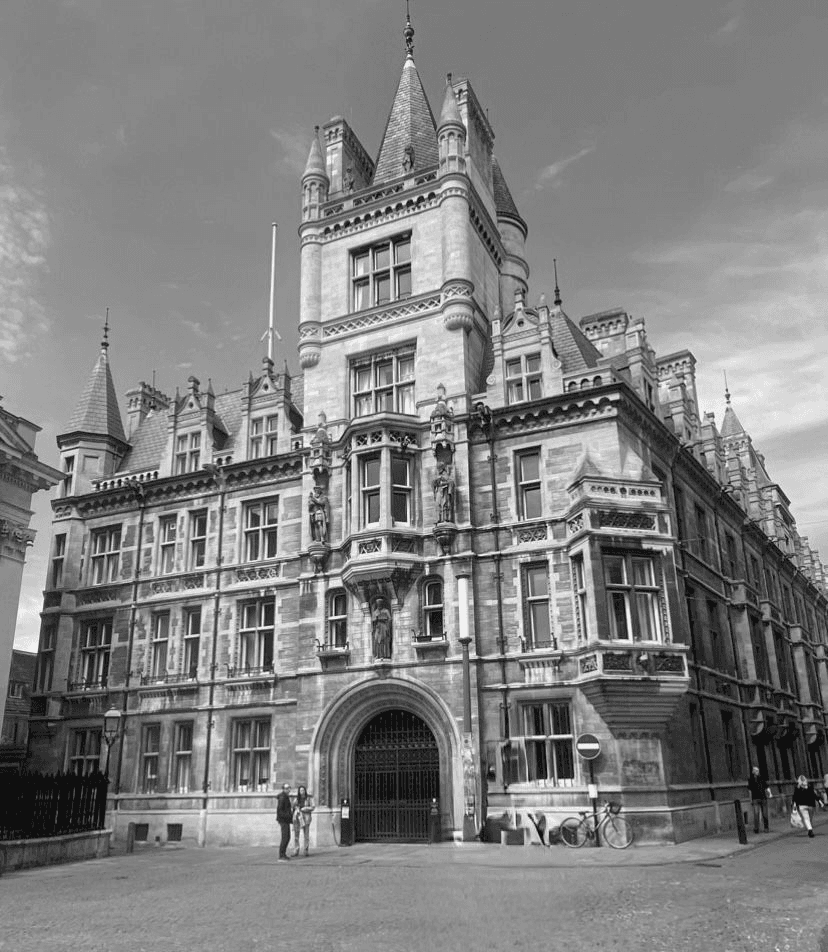

Cambridge O Level Literature in English: The Board We Cover
Cambridge is the board this page covers. Every fact here comes from Cambridge International's own 2010 syllabus.
Cambridge
Cambridge O Level Literature in English is syllabus 2010, two components graded A* to E, with a redesigned paper structure from 2028 onwards.

How Centaurus Helps Cambridge O Level Literature Students Excel
Both Designs Covered
The 2027 papers and the 2028 redesign are taught according to the year the student actually sits.
The Real Set Texts
Every named poem, book, short story and play for the relevant year is taught as a text, not as a summary.
Quotation or Annotation
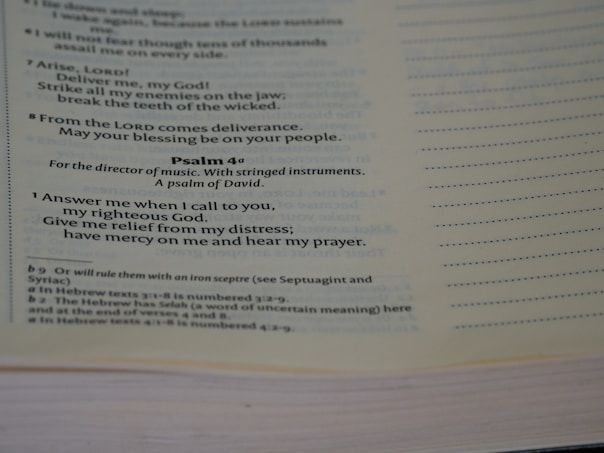
2027 candidates learn quotations because the exam is closed book, while 2028 candidates learn to navigate an annotated copy fast.
Passage and Essay Both
The 2027 drama paper requires one passage-based and one essay answer, so neither style can be avoided.
Unseen Reading from 2028
The unseen section asks for commentary on a poem or extract the student has not prepared, so first reading is rehearsed.
24/7 Progress Reporting
Families get access to the Centaurus Academy LMS, with attendance, progress and lesson notes available to parents, students and teachers at any time.



Why Centaurus Stands Out
Choosing the right Cambridge O Level Literature support makes a real difference. Here is how Centaurus Academy compares with typical online providers.

Meet our Team Of Experts
Our expert tutors bring deep subject knowledge and a passion for teaching — helping every student reach their full potential.


What Parents Say About Us

Hear from the parents and students who have experienced our personalised teaching first-hand.
Excellent long-term experience
We have an excellent long-term experience with the academy and Sir Awais. Our three children studied with them during different periods and succeeded well. We highly recommend the academy.
Excellent academy
Centaurus Academy is truly one of the best educational institutions I've come across. The environment is nurturing, the staff are incredibly dedicated, and the quality of education is outstanding. They focus not only on academic excellence but also on character building and personal growth. The teachers are supportive and go the extra mile to ensure every student feels confident and motivated.
My child has gained confidence
I'm very satisfied with the dedication and teaching approach. My child has gained confidence and improved significantly in understanding math concepts, thanks to the teacher's clear explanations and supportive guidance.



Cambridge O Level Literature in English: Frequently Asked Questions
Explore Tutoring by Country:
Pick your country to see the boards, levels, and subjects our tutors cover near you.




Step Into Your Success
Book a demo lesson today and see how one-on-one tutoring can help your child reach their goals.