



About Cambridge O Level English Language
Cambridge O Level English Language is syllabus 1123. This page works from the syllabus for exams in 2027 and 2028. Exams are available in the June and November series.
All candidates take two components, and all candidates are eligible for grades A* to E. Note the grade range: this qualification stops at E rather than running to G, and the syllabus states that E is the lowest grade, with anything below it ungraded. There is no Core and Extended tier.
Paper 1 is Reading. It lasts 2 hours and carries 50 marks and 50% of the qualification. Candidates answer all the questions in two compulsory sections, and they write their answers in the space provided on the question paper. The texts are printed in a question paper insert.
Paper 2 is Writing. It also lasts 2 hours and carries 50 marks and 50%. Candidates answer two questions, one from Section A and one from Section B, and the texts are printed on the question paper.
One rule applies to both papers and is easy to forget: dictionaries must not be used.
The structure of Paper 1 is unusually precise, and it is worth knowing question by question because it tells a student exactly what to practise. Section A is Comprehension and Use of Language and is worth 25 marks. Section B is Summary and Short response and is also worth 25 marks.
Within Section A, Question 1 is a comprehension task. Candidates respond to a series of sub-questions based on Text A, which is a narrative text of approximately 900 words taken from either the twentieth or the twenty-first century. The sub-questions are short answers testing understanding of both explicit and implicit meanings, and the question carries 16 marks, testing R1 and R2.
Question 2 is the Use of Language task. Candidates respond to a further series of sub-questions based on Text A, again as short answers, totalling 9 marks, and these relate to the author's use of language and the effect that has. This question tests R4, understanding of how writers achieve effects and influence readers.
Within Section B, Question 3a is the summary task. Candidates answer in response to Text B, writing a summary as continuous writing of no more than 150 words. Text B is approximately 550 to 600 words long. This is the question that surprises students, because it is marked on reading and writing at the same time: 10 marks for R1 and R5, and 10 marks for W2 and W3.
Question 3b is a short response task, where candidates show understanding of implicit meanings and attitude in response to Text B, for 5 marks, testing R2.
So Paper 1 is not one reading paper in the ordinary sense. It is a comprehension task, a language analysis task, a summary that must also be well written, and a short response about attitude, all in two hours. The 150 word limit on the summary is a hard limit and the two sets of marks on it mean that a technically accurate but clumsy summary loses writing marks as well as reading marks.
Paper 2 has two sections of 25 marks each. Section A is Directed Writing and is one compulsory question. Candidates read one or two texts totalling approximately 400 to 450 words, then use, develop and evaluate the information in them to create a discursive, argumentative or persuasive speech, email, report, letter or article, writing about 250 to 350 words. This question carries 15 marks for writing, testing W1 to W5, and 10 marks for reading, testing R3 and R5.
Section B is Composition. Candidates answer one question from a choice of four, two descriptive and two narrative, and write about 350 to 450 words. It carries 25 marks for writing, testing W1, W2, W3 and W5. Note that register, W4, is tested in directed writing but not in the composition, so the composition rewards description, structure, vocabulary and accuracy rather than the choice of voice.
The syllabus defines the two composition types plainly. A descriptive piece describes a person, place or situation, including atmosphere, in detail so that the reader can picture it. A narrative piece tells a story containing a sequence of connected events which may be real or imaginary.
The reading skills the course builds are specific: understanding written texts and the words and phrases within them, summarising and using material for a specific context, developing, analysing and evaluating facts, ideas and opinions, understanding how writers achieve their effects and influence readers, selecting appropriate information for specific purposes, and recognising and responding to linguistic devices, figurative language and imagery.
The reading material is defined too. Students should engage with a range of genres and text types from the twentieth and twenty-first centuries, including literature, fiction and non-fiction, and other forms such as blogs, essays, reviews or articles, short stories in their entirety, or extracts from a longer work of prose or drama. Study should focus on writers' use of language and style, and students should examine how influence may include facts, ideas, perspectives, opinions and bias.
The writing skills are expressing what is thought, felt and imagined, organising and conveying facts, ideas and opinions effectively, using a varied vocabulary appropriate to context, using effective sentence structures, understanding audience, purpose and form, and accuracy in spelling, punctuation and grammar. Students are introduced to writing in a variety of forms and purposes, including descriptive, narrative, argumentative and persuasive, and to the text types email, letter, report, article, speech and summary.
The assessment objectives are two. AO1 is Reading, broken into R1 understanding of explicit meanings, R2 understanding of implicit meanings and attitudes, R3 analysing, evaluating and developing facts, ideas and opinions with support from the text, R4 understanding of how writers achieve effects and influence readers, and R5 selecting and using information for specific purposes. AO2 is Writing, broken into W1 articulating experience and expressing what is thought, felt and imagined, W2 organising and structuring ideas for deliberate effect, W3 using a range of vocabulary and sentence structures appropriate to context, W4 using register appropriate to context, and W5 making accurate use of spelling, punctuation and grammar.
The overall weightings are AO1 Reading at 50 per cent and AO2 Writing at 50 per cent of the qualification, which looks perfectly balanced and is not how either paper works. Paper 1 is 80 per cent reading and 20 per cent writing, while Paper 2 is 20 per cent reading and 80 per cent writing.
So each paper carries a fifth of the other skill. Paper 1 is a reading paper that cannot be passed on reading alone, because the summary is marked on structure and vocabulary, and Paper 2 is a writing paper that cannot be passed on writing alone, because directed writing is marked on selecting and evaluating information from a text.
The qualification is graded A*, A, B, C, D or E, with A* the highest and E the lowest. A candidate whose performance does not meet the standard required for grade E is ungraded, which is reported on the statement of results but not on the certificate.
Who Cambridge O Level English Language 1123 Is For
This course suits students sitting Cambridge O Level English Language 1123 who can read accurately but write thinly, or who write fluently but cannot analyse how a writer creates an effect.
- Students sitting Cambridge O Level English Language 1123, in the June or November series
- Students who lose marks on the 150 word summary limit
- Students who retell a text instead of analysing its language
- Students who have never written a speech, a report or an email under exam conditions
- Students who forget the grade range stops at E and aim lower than they could

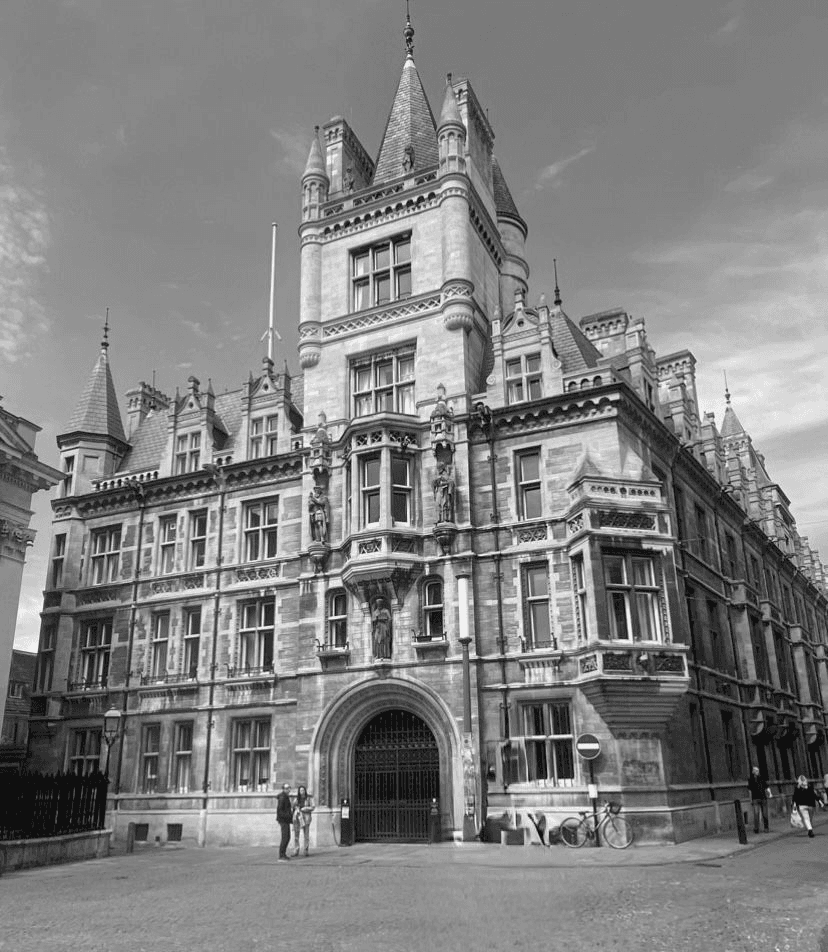

Cambridge O Level English Language: The Board We Cover
Cambridge is the board this page covers. Every fact here comes from Cambridge International's own 1123 syllabus.
Cambridge
Cambridge O Level English Language is syllabus 1123, two papers of 2 hours each, with reading and writing weighted a fifth each way.

How Centaurus Helps Cambridge O Level English Language Students Excel
The 150 Word Limit Drilled
The summary is capped and marked on writing as well as reading, so precision and brevity are practised as one skill.
Language Analysis Taught
R4 asks how a writer achieves an effect, which is a different skill from comprehension and is taught separately.
Every Text Type
Speech, email, report, letter, article and summary are all practised, alongside descriptive and narrative composition.
Both Halves of Each Paper
Paper 1 puts a fifth of its marks on writing and Paper 2 a fifth on reading, so neither paper is treated as testing one skill only.
Register Where It Counts
W4 is tested in directed writing but not the composition, so effort is aimed where the marks actually sit.
24/7 Progress Reporting
Families get access to the Centaurus Academy LMS, with attendance, progress and lesson notes available to parents, students and teachers at any time.






Why Centaurus Stands Out
Choosing the right Cambridge O Level English Language support makes a real difference. Here is how Centaurus Academy compares with typical online providers.

Meet our Team Of Experts
Our expert tutors bring deep subject knowledge and a passion for teaching — helping every student reach their full potential.


What Parents Say About Us

Hear from the parents and students who have experienced our personalised teaching first-hand.
Excellent long-term experience
We have an excellent long-term experience with the academy and Sir Awais. Our three children studied with them during different periods and succeeded well. We highly recommend the academy.
Excellent academy
Centaurus Academy is truly one of the best educational institutions I've come across. The environment is nurturing, the staff are incredibly dedicated, and the quality of education is outstanding. They focus not only on academic excellence but also on character building and personal growth. The teachers are supportive and go the extra mile to ensure every student feels confident and motivated.
My child has gained confidence
I'm very satisfied with the dedication and teaching approach. My child has gained confidence and improved significantly in understanding math concepts, thanks to the teacher's clear explanations and supportive guidance.



Cambridge O Level English Language: Frequently Asked Questions
Explore Tutoring by Country:
Pick your country to see the boards, levels, and subjects our tutors cover near you.




Step Into Your Success
Book a demo lesson today and see how one-on-one tutoring can help your child reach their goals.