



About Cambridge IGCSE Sociology
Cambridge IGCSE Sociology is syllabus 0495. This page works from the syllabus for exams in 2025, 2026 and 2027, version 3. Exams are available in the June and November series.
All candidates take two components, and all candidates are eligible for grades A* to G. There is no Core and Extended tier, so every student sits the same papers.
Paper 1 is Research Methods, Identity and Inequality. It lasts 2 hours, carries 80 marks and is worth 50% of the qualification. Paper 2 is Family, Education and Crime. It lasts 1 hour 45 minutes, carries 80 marks and is worth 50%. Both are externally assessed, and there is no coursework.
The two papers are split by topic, and that split matters for planning. Paper 1 covers the first three topics: Research methods, Identity: self and society, and Social stratification and inequality. Paper 2 covers the last three: Family, Education, and Crime, deviance and social control.
Here is the part that students most often discover too late. In Paper 1 there are three questions and candidates answer two. Question 1 on research methods is compulsory, and candidates then choose to answer either Question 2 on identity or Question 3 on stratification and inequality. Only one of those two content topics has to be answered, but teachers should teach all three, because all three are described as fundamental to the study of sociology and as providing a foundation for the Paper 2 topics.
Paper 2 works differently. There are three questions, one on each topic, and candidates choose to answer two of the three. The syllabus states plainly that teachers should teach two of these topics and that candidates must answer questions on two of the topics. So Paper 2 allows one topic to be left out entirely, while Paper 1 does not.
Every question in both papers is worth 40 marks, and the structures are published in detail. In Paper 1, Question 1 on research methods has five parts, a to e. Part (a) also has three sub-parts i, ii and iii. Those are based on source material printed in the question paper, which will contain qualitative or quantitative information or a mixture of both, and candidates must identify information, explain an aspect of the research, and explain problems or issues with the evidence from the source. Parts (b) and (c) are short-answer questions on concepts, ideas and examples related to research methods. Part (d) is a short essay-style question requiring candidates to evaluate a methodological view, approach or concept. Part (e) asks candidates to explain the primary methods, sampling and secondary evidence they would use to investigate a specified topic and give reasons for their choices, and the syllabus notes that no subject knowledge of the topic under investigation is required, because candidates are assessed on their knowledge of sociological methodology.
The content questions in both papers follow an identical six part structure, a to f. Parts (a) and (b) are short answers testing knowledge of terms, ideas and examples and requiring candidates to select and apply sociological knowledge to a specific area of the topic. Parts (c) and (d) require knowledge and understanding of sociological concepts, theories, evidence and views within a specified area, and candidates are encouraged to refer to sociological evidence and examples. Part (e) requires candidates to discuss a sociological issue or view in depth and in a structured way, supporting ideas with relevant evidence. Part (f) is a short essay-style question requiring reasoned arguments on both sides of a debate, supported with relevant sociological evidence.
So the shape of the exam is consistent: short answers, then knowledge with evidence, then discussion, then argument on both sides. A student who can define terms but cannot build a two-sided argument will lose the marks that carry the most weight in every question.
The content is organised into six topics, each broken into named questions. Topic 1 Research methods asks how sociologists approach the study of society, what types of data and evidence they use, and how they investigate society. Topic 2 Identity: self and society asks how we learn our identity, how society controls us, and what influences our social identity.
Topic 3 Social stratification and inequality asks what social stratification is, what attempts have been made to reduce social inequalities, and how globalisation has affected inequalities between societies. Topic 4 Family asks what the different types of families are, what the role of the family is for the individual and society, and how family life is changing.
Topic 5 Education asks what education and schooling are, what the roles and functions of education are, and what factors help to explain differences in educational achievement and experience. Topic 6 Crime, deviance and social control asks what crime, deviance and social control are, what the patterns of and explanations for crime and deviance are, and how crime is dealt with in different societies.
Research methods is not a separate appendix to this course; it is the foundation. The syllabus says the first topic provides a foundation for the others by considering the methods and procedures employed in sociological research, that promoting understanding of research methods and their strengths and limitations is a key feature of the syllabus, and that this underpins each of the other topics. It also asks teachers to emphasise how different levels of social life, macro and micro, are interconnected.
One note on Topic 4 is worth knowing. The syllabus says some subject content for Family may be taught if appropriate to the local context, and that teachers should decide whether to teach it taking into account learners' ages, cultural backgrounds, learning contexts, school policies and local legal requirements. That content will not be assessed, but may be used by candidates to support their responses where relevant.
The assessment objectives are three. AO1 is knowledge and understanding of sociological concepts, theories, evidence, views and research methods. AO2 is interpretation and application, covering applying relevant concepts, theories, evidence, views and research methods to support points or develop arguments, and explaining how they apply to a particular issue or question. AO3 is analysis and evaluation of sociological theories, evidence, views and research methods.
The overall weightings are AO1 at 39 per cent, AO2 at 39 per cent and AO3 at 22 per cent of the qualification. The per paper weightings are close but not identical: Paper 1 is 35 per cent AO1, 40 per cent AO2 and 25 per cent AO3, while Paper 2 is 43 per cent AO1, 37 per cent AO2 and 20 per cent AO3. Paper 1 leans slightly more on application and evaluation, which fits a paper that begins with a compulsory research methods question built on source material.
The qualification is graded A*, A, B, C, D, E, F or G, with A* the highest and G the lowest. A candidate whose performance does not meet the standard required for grade G is ungraded, which is reported on the statement of results but not on the certificate.
Who Cambridge IGCSE Sociology 0495 Is For
This course suits students sitting Cambridge IGCSE Sociology 0495 who can learn concepts but cannot argue, because the largest parts of every question ask for discussion and evidence on both sides.
- Students sitting Cambridge IGCSE Sociology 0495, in the June or November series
- Students who do not know Paper 2 allows one of three topics to be dropped
- Students who neglect research methods when it is compulsory in Paper 1
- Students who describe a debate instead of arguing both sides of it
- Students who cannot bring named sociological evidence into an answer

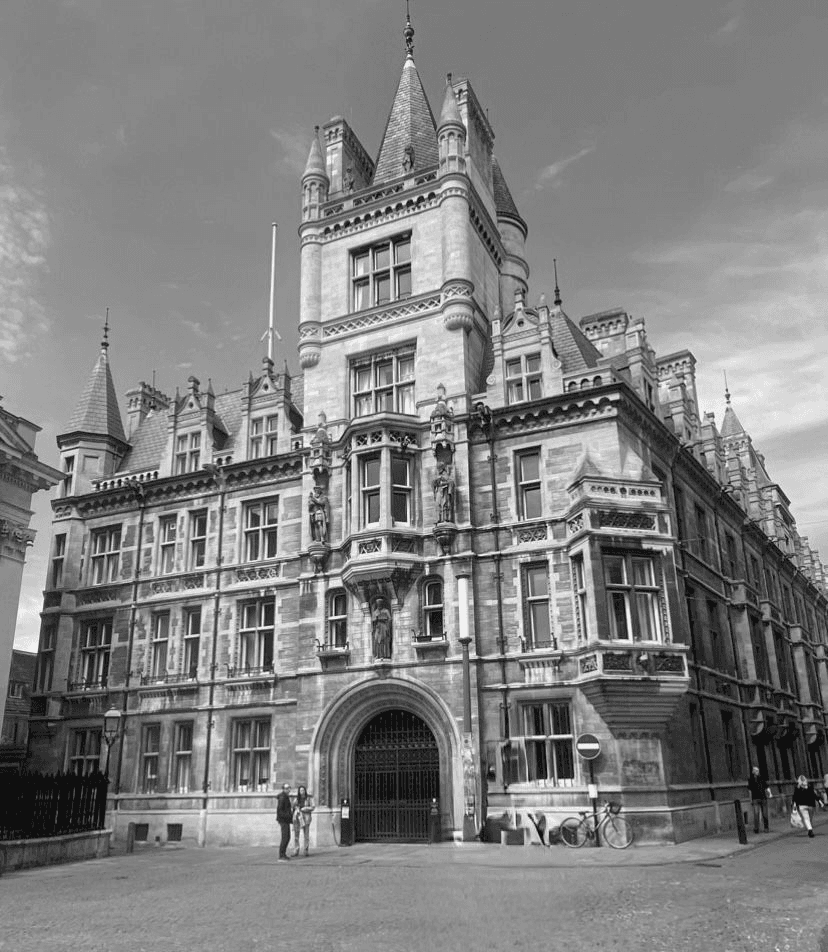

Cambridge IGCSE Sociology: The Board We Cover
Cambridge is the board this page covers. Every fact here comes from Cambridge International's own 0495 syllabus.
Cambridge
Cambridge IGCSE Sociology is syllabus 0495, two papers with no tiers, six topics, and a Paper 2 where two of three topics are studied.

How Centaurus Helps Cambridge IGCSE Sociology Students Excel
Research Methods First
It is compulsory in Paper 1 and underpins every other topic, so it is taught as the foundation rather than as an extra.
The Topic Choice Planned
Paper 2 lets a student study two of three topics, so which two to drop is a deliberate decision, not an accident.
Both Sides of the Debate
Part (f) in every question asks for reasoned arguments on both sides, so balancing an argument is practised as its own skill.
Evidence and Examples
Parts (c) to (f) reward reference to sociological evidence and views, so named studies and perspectives are built into revision.
Data Response Practised
Part (a) of the research methods question uses printed source material, so students rehearse reading data and spotting problems with evidence.
24/7 Progress Reporting
Families get access to the Centaurus Academy LMS, with attendance, progress and lesson notes available to parents, students and teachers at any time.






Why Centaurus Stands Out
Choosing the right Cambridge IGCSE Sociology support makes a real difference. Here is how Centaurus Academy compares with typical online providers.

Meet our Team Of Experts
Our expert tutors bring deep subject knowledge and a passion for teaching — helping every student reach their full potential.


What Parents Say About Us

Hear from the parents and students who have experienced our personalised teaching first-hand.
Excellent long-term experience
We have an excellent long-term experience with the academy and Sir Awais. Our three children studied with them during different periods and succeeded well. We highly recommend the academy.
Excellent academy
Centaurus Academy is truly one of the best educational institutions I've come across. The environment is nurturing, the staff are incredibly dedicated, and the quality of education is outstanding. They focus not only on academic excellence but also on character building and personal growth. The teachers are supportive and go the extra mile to ensure every student feels confident and motivated.
My child has gained confidence
I'm very satisfied with the dedication and teaching approach. My child has gained confidence and improved significantly in understanding math concepts, thanks to the teacher's clear explanations and supportive guidance.



Cambridge IGCSE Sociology: Frequently Asked Questions
Explore Tutoring by Country:
Pick your country to see the boards, levels, and subjects our tutors cover near you.




Step Into Your Success
Book a demo lesson today and see how one-on-one tutoring can help your child reach their goals.