



About Cambridge IGCSE Physics
Cambridge IGCSE Physics is syllabus 0625. This page works from the syllabus for exams in 2026, 2027 and 2028. Exams are available in the June and November series, and also in the March series in India.
All candidates take three papers, and the first decision is which route to follow. Candidates who have studied the Core syllabus content, or who are expected to achieve a grade D or below, are entered for Paper 1, Paper 3 and either Paper 5 or Paper 6, and are eligible for grades C to G. Candidates who have studied the Extended syllabus content, which is the Core plus the Supplement, and who are expected to achieve a grade C or above, are entered for Paper 2, Paper 4 and either Paper 5 or Paper 6, and are eligible for grades A* to G.
That decision governs the whole course. Candidates who are only taught the Core content can achieve a maximum of grade C, so anyone aiming for A* to C has to be taught the Extended content throughout, not as a catch-up at the end.
Paper 1 is Multiple Choice (Core) and Paper 2 is Multiple Choice (Extended). Each is 45 minutes, carries 40 marks and is worth 30% of the qualification, and each consists of 40 four-option multiple-choice questions. Paper 1 is based on the Core content only and Paper 2 is based on the Core and Supplement.
Paper 3 is Theory (Core) and Paper 4 is Theory (Extended). Each is 1 hour 15 minutes, carries 80 marks and is worth 50% of the qualification, and each is made up of compulsory short-answer and structured questions.
The practical component is one paper from a choice of two. Paper 5 is the Practical Test, lasting 1 hour 15 minutes and carrying 40 marks. Paper 6 is the Alternative to Practical, lasting 1 hour and carrying 40 marks. Each is worth 20% of the qualification. The two papers require the same experimental skills, an understanding of the same experimental contexts and the same assessment objective, so the choice is about whether a centre can run the experiments rather than about difficulty. Candidates taking Paper 5 will be required to do experiments in a laboratory, and candidates taking Paper 6 will not.
The practical context list for Physics is unusually concrete, and it is worth knowing exactly what a candidate can be asked about. It includes measuring physical quantities such as length, volume or force, measuring small distances or short intervals of time, and determining a derived quantity such as the extension per unit load for a spring, the value of a known resistance or the acceleration of an object. It also includes testing and identifying the relationship between two variables, such as between the potential difference across a wire and its length, comparing measured quantities such as angles of reflection, and comparing derived quantities such as density.
Beyond that, the list covers cooling and heating including measurement of temperature, experiments using springs and balances, timing motion or oscillations, and electric circuits including connecting and reconnecting them and measuring current and potential difference. It finishes with optics experiments using equipment such as optics pins, mirrors, prisms, lenses, and glass or Perspex blocks in both rectangular and semicircular form, including the use of transparent, translucent and opaque substances.
The syllabus content runs from Topic 1 to Topic 6: Motion, forces and energy, Thermal physics, Waves, Electricity and magnetism, Nuclear physics, and Space physics.
Physics has fewer, broader topics than the other sciences, so each one carries more weight. Every topic is presented in two columns, Core and Supplement, and the Supplement column is what unlocks the higher grades. Teaching only the Core column produces a complete qualification with a grade C ceiling.
The assessment objectives are three. AO1 is knowledge with understanding, covering scientific phenomena, facts, laws, definitions, concepts and theories, scientific vocabulary and conventions including symbols and units, scientific instruments and apparatus including techniques of operation and safety, and scientific applications with their social, economic and environmental implications. AO2 is handling information and problem-solving, covering locating and organising information, translating information from one form to another, manipulating data, identifying patterns and trends, forming conclusions, presenting reasoned explanations, making predictions and solving problems including quantitative ones. AO3 is experimental skills and investigations.
The weightings are AO1 at 50 per cent, AO2 at 30 per cent and AO3 at 20 per cent of the qualification. Within the examined papers the split is different. Papers 1 and 2 are 63 per cent AO1 and 37 per cent AO2, and Papers 3 and 4 are also 63 per cent AO1 and 37 per cent AO2, with nothing on AO3 in either. The practical papers are 100 per cent AO3.
The qualification is graded A*, A, B, C, D, E, F or G, with A* the highest and G the lowest. A candidate whose performance does not meet the standard required for grade G is ungraded, which is reported on the statement of results but not on the certificate.
Who Cambridge IGCSE Physics 0625 Is For
This course suits students sitting Cambridge IGCSE Physics 0625 who need the Extended route planned early and who want the six topics taught properly, because each one carries more weight than in the other sciences.
- Students sitting Cambridge IGCSE Physics 0625, in the June or November series
- Students taught Core only who need the Supplement to reach A* to C
- Students who can quote a formula but cannot rearrange or apply it
- Students sitting Paper 6 who have not practised circuits, optics and timing in writing
- Students who leave Space physics too late because it feels unfamiliar

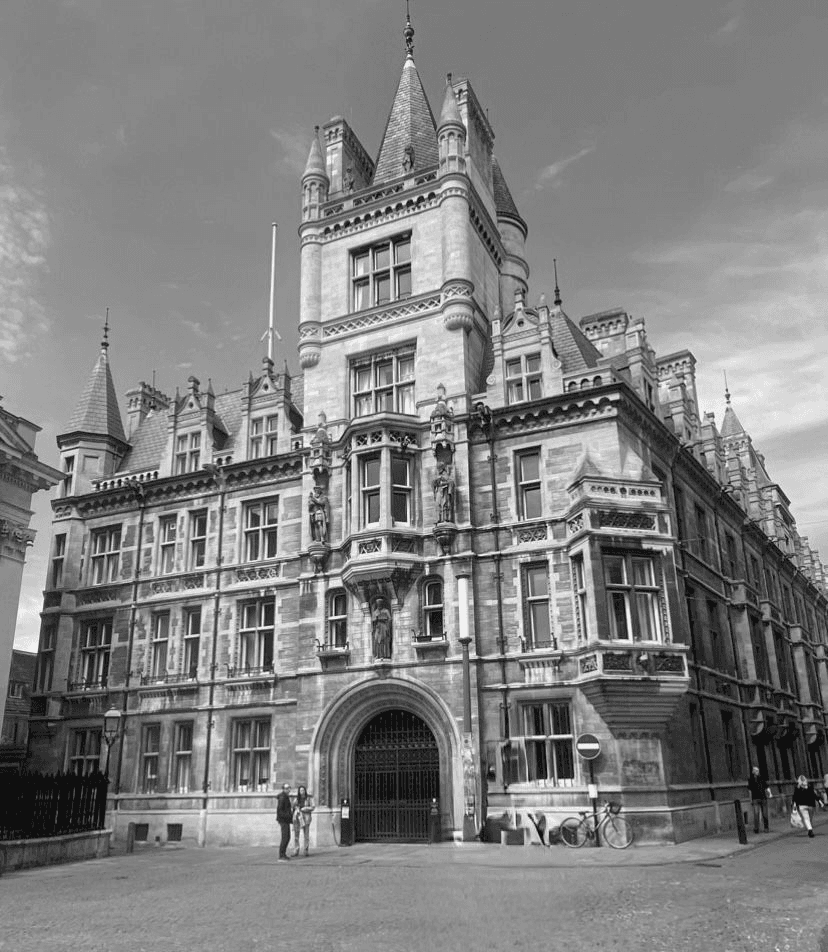

Cambridge IGCSE Physics: The Board We Cover
Cambridge is the board this page covers. Every fact here comes from Cambridge International's own 0625 syllabus.
Cambridge
Cambridge IGCSE Physics is syllabus 0625, three papers with a Core route capped at grade C and an Extended route open to A*, across six broad topics.

How Centaurus Helps Cambridge IGCSE Physics Students Excel
The Route Decided Early
Core caps a student at grade C, so the Extended content is planned from the first lesson for anyone aiming higher.
Six Topics Given Room
Fewer topics means each carries more marks, so no topic is treated as optional or left to the end.
Formula Work Drilled
Rearranging, units and significant figures are practised, because AO2 includes problems of a quantitative nature.
Space Physics Taught Early
It is the topic students most often neglect, so it is scheduled rather than squeezed in before the exam.
Practical Contexts in Writing
Circuits, optics, springs and timing are rehearsed as written answers for Paper 6, not only as bench work.
24/7 Progress Reporting
Families get access to the Centaurus Academy LMS, with attendance, progress and lesson notes available to parents, students and teachers at any time.



Why Centaurus Stands Out
Choosing the right Cambridge IGCSE Physics support makes a real difference. Here is how Centaurus Academy compares with typical online providers.

Meet our Team Of Experts
Our expert tutors bring deep subject knowledge and a passion for teaching — helping every student reach their full potential.


What Parents Say About Us

Hear from the parents and students who have experienced our personalised teaching first-hand.
Excellent long-term experience
We have an excellent long-term experience with the academy and Sir Awais. Our three children studied with them during different periods and succeeded well. We highly recommend the academy.
Excellent academy
Centaurus Academy is truly one of the best educational institutions I've come across. The environment is nurturing, the staff are incredibly dedicated, and the quality of education is outstanding. They focus not only on academic excellence but also on character building and personal growth. The teachers are supportive and go the extra mile to ensure every student feels confident and motivated.
My child has gained confidence
I'm very satisfied with the dedication and teaching approach. My child has gained confidence and improved significantly in understanding math concepts, thanks to the teacher's clear explanations and supportive guidance.



Cambridge IGCSE Physics: Frequently Asked Questions
Explore Tutoring by Country:
Pick your country to see the boards, levels, and subjects our tutors cover near you.




Step Into Your Success
Book a demo lesson today and see how one-on-one tutoring can help your child reach their goals.