



About Cambridge IGCSE History
Cambridge IGCSE History is syllabus 0470. This page works from the syllabus for exams in 2024, 2025 and 2026. Exams are available in the June and November series, and also in the March series in India only.
All candidates take three components, and all candidates are eligible for grades A* to G. Paper 1 and Paper 2 are taken by everyone. Candidates then take either Component 3, Coursework, or Paper 4, Alternative to Coursework. Both are worth 30% and both carry 40 marks, but one is internally assessed and externally moderated, and the other is an examined paper.
The weightings are 40% for Paper 1, 30% for Paper 2 and 30% for the third component. There is no Core and Extended tier.
Paper 1 is Structured Questions. It lasts 2 hours and carries 60 marks. Candidates answer two questions from Section A, which is the Core content, and one question from Section B, which is the Depth studies. All questions are in the form of structured essays split into three parts, (a), (b) and (c).
Paper 2 is Document Questions. It lasts 1 hour 45 minutes and carries 40 marks. Candidates answer one question on one prescribed topic taken from Section A, the Core content, and they are presented with a range of source materials relating to that prescribed topic. The prescribed topics change in each exam series.
That last point is worth emphasising, because it is the single most common planning mistake in this subject. Paper 2 is not a general document paper. It is a paper on one named topic that Cambridge publishes in advance for each series, so a class that revises the wrong topics can arrive at the exam having prepared for a document question that is not being asked.
Component 3 is Coursework. Candidates produce one piece of extended writing based on a depth study from the syllabus or on a depth study devised by the centre, and it is internally assessed and externally moderated. The syllabus notes that this gives schools the flexibility to choose topics to suit their own context and candidates' interests, and that guidance is available on the School Support Hub.
Paper 4 is the Alternative to Coursework. It lasts 1 hour and carries 40 marks. Candidates answer one question on a depth study, and all questions are structured essays split into two parts, (a) and (b).
The content has two layers. Every candidate studies Core content, choosing either Option A or Option B. On top of that, every candidate must also study at least one of five depth studies.
Option A is The nineteenth century: the development of modern nation states, 1848 to 1914, and it is built around six key questions. Were the revolutions of 1848 important? How was Italy unified? How was Germany unified? Why was there a civil war in the United States and what were its results? Why, and with what effects, did nations gain and expand their overseas empires in the nineteenth century? And what caused the First World War?
Option B is The twentieth century: international relations since 1919, also built around six key questions. Was the Treaty of Versailles fair? To what extent was the League of Nations a success? How far was Hitler's foreign policy to blame for the outbreak of war in Europe in 1939? Who was to blame for the Cold War? How effectively did the United States contain the spread of communism? And how secure was the USSR's control over Eastern Europe from 1948 to about 1989?
So a student studies one of two quite different courses. Option A runs from the European revolutions of 1848 to the outbreak of the First World War, and Option B runs from the Versailles settlement to the end of the Cold War. Neither is a survey of everything in between, and a student's understanding of the period depends heavily on which one the school has chosen.
The five depth studies, of which at least one must be studied, are A The First World War, 1914 to 1918; B Germany, 1918 to 1945; C Russia, 1905 to 1941; D The United States, 1919 to 1941; and E The Second World War in Europe and the Asia Pacific, 1939 to about 1945.
The depth studies are what Paper 1 Section B and the third component draw on, which makes them the natural place to concentrate extended writing practice. A school that has chosen Option B and depth study B is studying the First World War only if it chooses the matching depth study, so the two layers do not automatically line up.
The assessment objectives are three. AO1 is the ability to recall, select, organise and deploy knowledge of the syllabus content. AO2 is the ability to construct historical explanations using an understanding of cause and consequence, change and continuity, similarity and difference, and the motives, emotions, intentions and beliefs of people in the past. AO3 is the ability to understand, interpret, evaluate and use a range of sources as evidence, in their historical context.
The overall weightings are AO1 at 30 per cent, AO2 at 45 per cent and AO3 at 25 per cent of the qualification. Constructing explanations is the largest objective, so the qualification rewards argument and reasoning over recall.
The per component weightings are unusually clean, and they describe three completely different papers. Paper 1 is 33 per cent AO1, 67 per cent AO2 and nothing on AO3. Paper 2 is 20 per cent AO1, nothing on AO2 and 80 per cent AO3. Component 3 and Paper 4 are 38 per cent AO1 and 62 per cent AO2, with nothing on AO3.
So Paper 1 never asks a candidate to analyse a source, and Paper 2 is almost entirely source analysis. A student who writes strong essays can carry Paper 1 and still lose most of Paper 2, and a student who is good with documents but weak at argument has the opposite problem. Both skills have to be built separately, because no paper tests both.
The qualification is graded A*, A, B, C, D, E, F or G, with A* the highest and G the lowest. A candidate whose performance does not meet the standard required for grade G is ungraded, which is reported on the statement of results but not on the certificate.
Who Cambridge IGCSE History 0470 Is For
This course suits students sitting Cambridge IGCSE History 0470 who can tell the story but cannot argue a case or interrogate a source, because those are two separate papers here.
- Students sitting Cambridge IGCSE History 0470, in the June or November series
- Students who have not checked which prescribed topic Paper 2 is examining
- Students who write narrative instead of explanation
- Students who have never practised source evaluation in historical context
- Students whose depth study writing is thin compared with their core content

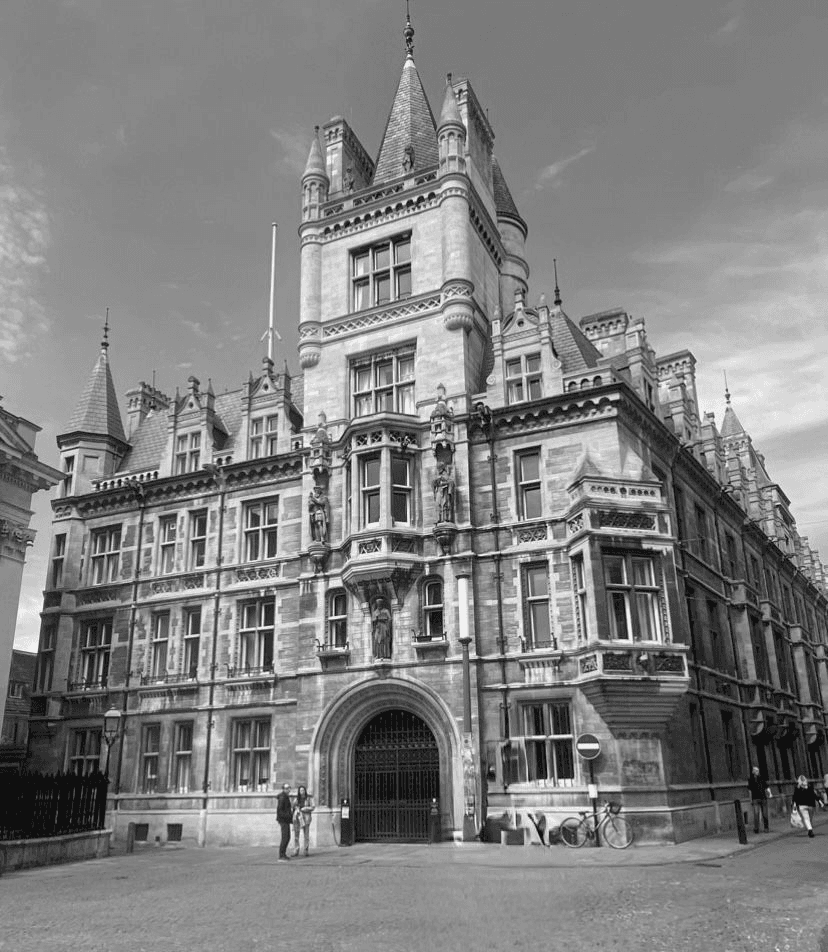

Cambridge IGCSE History: The Board We Cover
Cambridge is the board this page covers. Every fact here comes from Cambridge International's own 0470 syllabus.
Cambridge
Cambridge IGCSE History is syllabus 0470, a choice of two core options, five depth studies, and a document paper that changes topic each series.

How Centaurus Helps Cambridge IGCSE History Students Excel
Both Skills Built
Paper 1 tests explanation and Paper 2 tests sources, with no overlap, so essay writing and document work are taught separately.
The Prescribed Topic Checked
Paper 2 examines one topic that Cambridge announces for each series, so the right topic is confirmed before revision is planned.
The Option Chosen Carefully
Option A runs from 1848 to 1914 and Option B from 1919 to the end of the Cold War, and the course is planned around whichever is taught.
Depth Studies Covered
At least one of the five depth studies is studied properly, since Section B and the third component draw on it.
Explanation, Not Narrative
AO2 asks for cause and consequence, change and continuity, and the motives and beliefs of people in the past, so answers are built as arguments.
24/7 Progress Reporting
Families get access to the Centaurus Academy LMS, with attendance, progress and lesson notes available to parents, students and teachers at any time.



Why Centaurus Stands Out
Choosing the right Cambridge IGCSE History support makes a real difference. Here is how Centaurus Academy compares with typical online providers.

Meet our Team Of Experts
Our expert tutors bring deep subject knowledge and a passion for teaching — helping every student reach their full potential.


What Parents Say About Us

Hear from the parents and students who have experienced our personalised teaching first-hand.
Excellent long-term experience
We have an excellent long-term experience with the academy and Sir Awais. Our three children studied with them during different periods and succeeded well. We highly recommend the academy.
Excellent academy
Centaurus Academy is truly one of the best educational institutions I've come across. The environment is nurturing, the staff are incredibly dedicated, and the quality of education is outstanding. They focus not only on academic excellence but also on character building and personal growth. The teachers are supportive and go the extra mile to ensure every student feels confident and motivated.
My child has gained confidence
I'm very satisfied with the dedication and teaching approach. My child has gained confidence and improved significantly in understanding math concepts, thanks to the teacher's clear explanations and supportive guidance.



Cambridge IGCSE History: Frequently Asked Questions
Explore Tutoring by Country:
Pick your country to see the boards, levels, and subjects our tutors cover near you.




Step Into Your Success
Book a demo lesson today and see how one-on-one tutoring can help your child reach their goals.