



About Cambridge IGCSE Additional Mathematics
Cambridge IGCSE Additional Mathematics is syllabus 0606. This page works from the syllabus for exams in 2025, 2026 and 2027. Exams are available in the June and November series, and also in the March series in India.
This is not a second version of IGCSE Mathematics. The syllabus states that knowledge of the content of Cambridge IGCSE Mathematics, or an equivalent syllabus, is assumed, and that the course is designed to stretch the more able candidates and provide a smooth transition to Cambridge AS and A Level Mathematics. So it is a bridging qualification, taken alongside or after the standard Mathematics course, and it assumes that course has already been done.
All candidates take two components, and all candidates are eligible for grades A* to E. Note that the top grade range stops at E rather than running to G, which is a difference from most IGCSE subjects.
There is no Core and Extended tier here, because the whole syllabus is the demanding content. Every candidate studies all fourteen topics.
Paper 1 is the non-calculator paper. It lasts 2 hours, carries 80 marks and is worth 50% of the qualification, and it consists of structured and unstructured questions. Use of a calculator is not allowed.
Paper 2 is the calculator paper. It also lasts 2 hours, carries 80 marks and is worth 50%, and it consists of structured and unstructured questions. Candidates should have a scientific calculator for this paper.
The two papers are therefore identical in length and marks, and the only difference is the calculator. That makes the non-calculator paper a genuine skill in its own right, just as it is in Mathematics, but at a higher level of content.
One detail is worth knowing before revising: a List of formulas is provided on page 2 of the examination papers for candidates to refer to during the examination. The syllabus also confirms that proofs of results will not be required unless specifically mentioned in the syllabus, and that candidates are expected to be familiar with the scientific notation for compound units, such as metres per second written with a negative index.
There is also a subtle warning about assumed knowledge. The syllabus says that IGCSE Mathematics material which is not included in this subject content, such as surds and indices, will not be tested directly, but that it may be required in response to questions on other topics. So a student cannot leave that material behind, even though it is not examined on its own.
The subject content is organised into fourteen topics: Functions; Quadratic functions; Factors of polynomials; Equations, inequalities and graphs; Simultaneous equations; Logarithmic and exponential functions; Straight-line graphs; Coordinate geometry of the circle; Circular measure; Trigonometry; Permutations and combinations; Series; Vectors in two dimensions; and Calculus.
The content inside those topics is where the level becomes clear. Functions covers domain and range, function notation, one-one functions, inverse functions, composite functions, and sketch graphs showing the relationship between a function and its inverse. Quadratic functions covers maximum and minimum values, the conditions for the equation to have particular kinds of roots through the discriminant, solving quadratic equations, and quadratic inequalities.
Factors of polynomials covers the remainder and factor theorems, finding factors, and solving cubic equations. Equations, inequalities and graphs covers solving equations of particular types, solving inequalities graphically or algebraically, substitution to form and solve a quadratic, sketching cubic polynomials, and solving cubic inequalities graphically. Simultaneous equations covers solving them in two variables, and the logarithmic and exponential functions topic covers the properties and graphs, the laws of logarithms, and solving equations of the form where a base is raised to an unknown power.
The remaining topics take a student well beyond the standard IGCSE course: straight-line graphs, coordinate geometry of the circle, circular measure in radians, trigonometry, permutations and combinations, series, vectors in two dimensions, and calculus. Calculus alone is a substantial step, and it is the clearest sign that this syllabus is built as preparation for A Level rather than as an alternative to IGCSE Mathematics.
The syllabus notes that the subject content is organised by topic and is not presented in a teaching order, so schools plan their own sequence, and that learners are expected to use the listed techniques and apply them to solve problems with or without a calculator as appropriate.
The assessment objectives are two. AO1 is knowledge and understanding of mathematical techniques, covering recalling and applying knowledge, carrying out routine procedures in mathematical and abstract situations, using notation and terminology, performing calculations with and without a calculator, organising and presenting information in written form, tables, graphs and diagrams, working to appropriate degrees of accuracy, and recognising and using spatial relationships in two and three dimensions. AO2 is analyse, interpret and communicate mathematically.
The weightings are given as ranges rather than fixed figures. AO1 is 45 to 55 per cent and AO2 is 45 to 55 per cent of the qualification, and the per component tables are the same for both papers. So the two objectives are deliberately balanced, and neither paper is weighted towards recall or towards problem solving.
The qualification is graded A*, A, B, C, D or E, with A* the highest and E the lowest acknowledged grade in this syllabus. A candidate whose performance does not meet the standard required for the lowest grade is ungraded, which is reported on the statement of results but not on the certificate.
Who Cambridge IGCSE Additional Mathematics 0606 Is For
This course suits students sitting Cambridge IGCSE Additional Mathematics 0606 who already have the standard Mathematics course behind them and want the stronger preparation for A Level.
- Students sitting Cambridge IGCSE Additional Mathematics 0606, in the June or November series
- Students planning to take AS or A Level Mathematics or another highly numerate subject
- Students who are fluent with a calculator but not without one
- Students who have not yet met calculus, logarithms or circular measure
- Students who assume IGCSE Mathematics content such as surds will not be needed

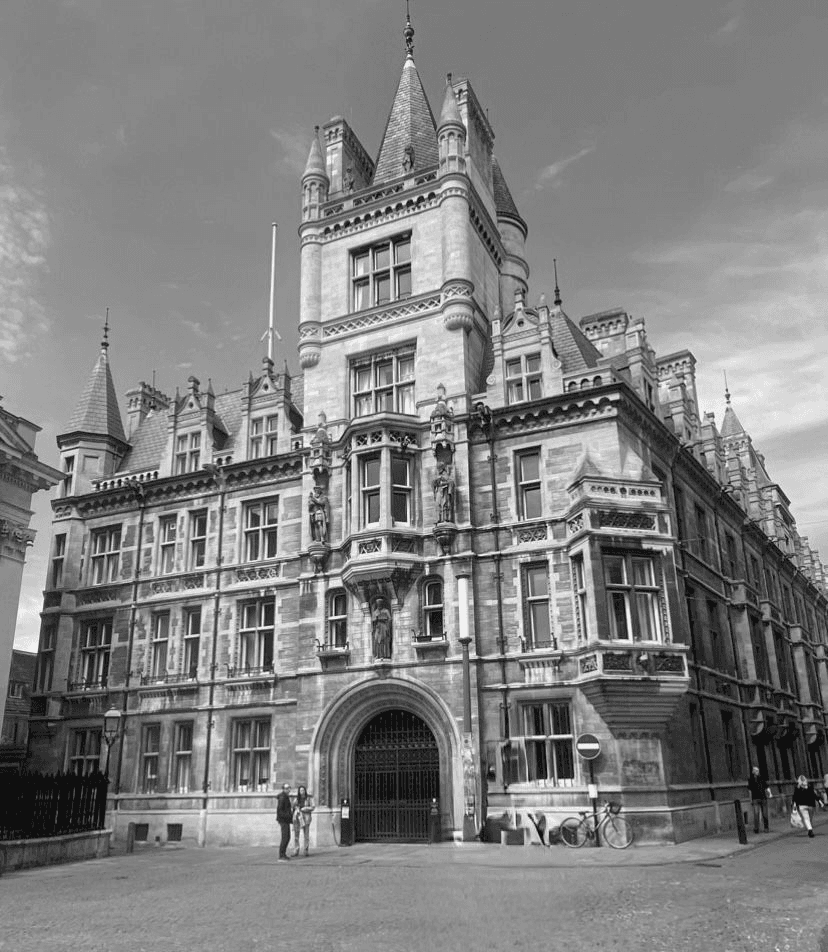

Cambridge IGCSE Additional Mathematics: The Board We Cover
Cambridge is the board this page covers. Every fact here comes from Cambridge International's own 0606 syllabus.
Cambridge
Cambridge IGCSE Additional Mathematics is syllabus 0606, a bridging course to A Level, with fourteen topics and two equal papers of 2 hours.

How Centaurus Helps Cambridge IGCSE Additional Mathematics Students Excel
The Bridge Built Properly
The syllabus is designed for the more able and as a transition to A Level Mathematics, so the course is taught at that level rather than as harder IGCSE.
Calculus Taught From Scratch
Differentiation and integration are new to almost every student, so they are given real time rather than squeezed in at the end.
Both Calculator Modes
One paper allows no calculator at all, so fluency with logs, radians and exact values is drilled as its own skill.
All Fourteen Topics
From functions and the factor theorem through to series, vectors and calculus, every topic is covered in full.
The Formula Sheet Used Well
A List of formulas is provided in the exam, so students learn which formula to reach for and when, instead of memorising blindly.
24/7 Progress Reporting
Families get access to the Centaurus Academy LMS, with attendance, progress and lesson notes available to parents, students and teachers at any time.






Why Centaurus Stands Out
Choosing the right Cambridge IGCSE Additional Mathematics support makes a real difference. Here is how Centaurus Academy compares with typical online providers.

Meet our Team Of Experts
Our expert tutors bring deep subject knowledge and a passion for teaching — helping every student reach their full potential.


What Parents Say About Us

Hear from the parents and students who have experienced our personalised teaching first-hand.
Excellent long-term experience
We have an excellent long-term experience with the academy and Sir Awais. Our three children studied with them during different periods and succeeded well. We highly recommend the academy.
Excellent academy
Centaurus Academy is truly one of the best educational institutions I've come across. The environment is nurturing, the staff are incredibly dedicated, and the quality of education is outstanding. They focus not only on academic excellence but also on character building and personal growth. The teachers are supportive and go the extra mile to ensure every student feels confident and motivated.
My child has gained confidence
I'm very satisfied with the dedication and teaching approach. My child has gained confidence and improved significantly in understanding math concepts, thanks to the teacher's clear explanations and supportive guidance.



Cambridge IGCSE Additional Mathematics: Frequently Asked Questions
Explore Tutoring by Country:
Pick your country to see the boards, levels, and subjects our tutors cover near you.




Step Into Your Success
Book a demo lesson today and see how one-on-one tutoring can help your child reach their goals.