



About Cambridge AS Level English Language
Cambridge AS Level English Language is syllabus 9093. This page works from the syllabus for exams in 2027 and 2028, version 1 published September 2024. Exams are available in the June and November series, and also in the March series in India.
An AS Level candidate sits two papers in the same exam series, and candidates following an AS Level route are eligible for grades a to e. Candidates following an A Level route are eligible for grades A* to E. The AS grade scale stops at e and uses lower case letters.
Paper 1 is Reading. It lasts 2 hours 15 minutes, carries 50 marks and is worth 50% of the AS Level and 25% of the A Level. Candidates answer two compulsory questions, Question 1 in Section A and Question 2 in Section B.
Paper 2 is Writing. It lasts 2 hours, carries 50 marks and is worth 50% of the AS Level and 25% of the A Level. Candidates answer two questions: one compulsory question from Section A, and one question from a choice of three in Section B.
The two papers are equally weighted, which is unusual in this AS block where most subjects weight one paper more heavily. Here a candidate who reads well and writes well is rewarded evenly, and a candidate who is strong on one and weak on the other is pulled back to the middle.
The split of purpose is stated plainly in the syllabus: in Paper 1 candidates are primarily assessed on skills and techniques related to reading, and in Paper 2 they are primarily assessed on skills and techniques related to writing. The knowledge and understanding required is the same for both papers, so the same body of material is used in two different ways.
That body of material is published in unusual detail, and it is the most useful part of the syllabus for revision. Candidates must know the conventions of a wide range of written textual forms, and the syllabus lists them: advertisements, brochures, leaflets, editorials, news stories, articles, reviews, blogs, investigative journalism, letters, podcasts, autobiographies and biographies, travel writing, diaries, essays, scripted speech, narrative writing and descriptive writing.
Candidates must also know the linguistic elements and literary features of texts, again listed: parts of speech and word classes, vocabulary, figurative language, phonology, morphology, rhetorical devices, voice, aspect, tense, modality, narrative perspective, word ordering and sentence structure, paragraph level and text level structure, formality and informality of tone, and pragmatics.
On top of those two lists, candidates must understand the significance of audience in both the design and reception of texts, and the ways in which genre, purpose and context contribute to the meaning of texts. Those three ideas, audience, genre and context, run through every answer on both papers.
The reading skills are set out as specific techniques rather than general abilities. Candidates should be able to read a range of unseen texts, analyse the ways linguistic elements come together in a text to create meaning, recognise different non fiction textual forms and their conventions, write analytically about the effects produced by linguistic elements and literary features, integrate individual analytical points into broader overall responses, select and interpret words and phrases with care and precision, recognise and comment on the overall style of a text and exemplify it through specific instances, use quotations and evidence with judgement, use appropriate language to link quotations with explanatory comments, and integrate quotations into a cohesive argument.
The reading paper also asks for writing. Candidates should be able to write short directed pieces in response to a text, write in the same style as another text, write in a different style from a text while re using its content and material, and compare the style and linguistic elements of their own writing with those of a given text.
That last group is easy to overlook. Paper 1 is called Reading, but it contains directed writing tasks in which a candidate imitates or transforms the style of a source text, so the paper rewards a candidate who can both analyse a style and reproduce it.
The writing skills are equally specific. Candidates should write for a specified audience and purpose to fulfil the brief provided, produce an appropriate structure for longer pieces of writing, organise writing to achieve specific effects, structure paragraphs, use a range of appropriate linguistic elements and literary features, express ideas accurately and clearly at both sentence and word level, and reflect upon and evaluate the qualities of their own writing including its purpose, form and audience.
The syllabus gives worked examples of what those structural skills look like in practice, and they are worth knowing because they are concrete. For structure, it names Freytag's Pyramid in imaginative writing, dialectical structure in discursive writing, and introductory, summary and evaluative sections in review writing. For organisation, it names withholding key information in imaginative writing, juxtaposing counter arguments in discursive writing, and evidentiary logic in critical writing. For paragraphing, it names topic sentences, connectives, internal coherence and discourse markers. For linguistic elements, it names imagery in descriptive writing, rhetorical devices in argumentative writing, and evaluative lexis in critical writing.
The assessment objectives are five, which is more than any other subject in this AS block. AO1 is reading and demonstrating understanding of a wide variety of texts. AO2 is writing effectively, creatively, accurately and appropriately, for a range of audiences and purposes. AO3 is analysing the ways in which writers and speakers choices of form, structure and language produce meaning and style. AO4 is demonstrating understanding of linguistic issues, concepts, methods and approaches. AO5 is analysing and synthesising language data from a variety of sources.
Here is the fact that matters most about this qualification. At AS Level, AO4 and AO5 are worth nothing at all. The AS weightings are AO1 at 15 per cent, AO2 at 45 per cent and AO3 at 40 per cent, with AO4 and AO5 at zero. At A Level the picture changes completely: AO1 is 20 per cent, AO2 is 30 per cent, AO3 is 20 per cent, AO4 is 20 per cent and AO5 is 10 per cent.
So the AS Level is purely reading, writing and analysis. The linguistics content, which is the fourth and fifth objectives, does not appear until A Level. A student who is told that AS English Language involves studying language change or child language acquisition has been told about the A Level, not the AS.
The per paper weightings show that each AS paper is dominated by one skill. Paper 1 is 30 per cent AO1, 10 per cent AO2 and 60 per cent AO3, so analysis carries most of that paper. Paper 2 is 80 per cent AO2 and 20 per cent AO3, with nothing on AO1, so the writing paper is almost entirely about writing.
A Level candidates go on to Papers 3 and 4 and concentrate on four specialised subject areas: language change, child language acquisition, English in the world, and language and the self. Paper 3 focuses on analytical reading and Paper 4 on discursive writing, and between them they carry all of AO4 and all of AO5.
Two further facts are useful for planning. The syllabus states there are no significant changes which affect teaching in this version, and that any textbooks endorsed to support the syllabus for examination from 2021 are still suitable for use. And on the staged route, candidates carry forward their AS Level marks, not their grade, subject to rules and time limits in the Cambridge Handbook.
The qualification is graded a, b, c, d or e for an AS Level candidate.
Who Cambridge AS Level English Language 9093 Is For
This course suits students sitting Cambridge AS Level English Language 9093 in Year 12 who can discuss a text but cannot analyse how a specific word choice produces its effect, which is where most of Paper 1 sits.
- Students sitting Cambridge AS Level English Language 9093, in the June, November or India March series
- Students taking the AS Level as a stand alone qualification in Year 12
- Students who have been taught A Level linguistics content for a paper that does not test it
- Students who write well but quote without precision
- Students who have never written in the style of a source text

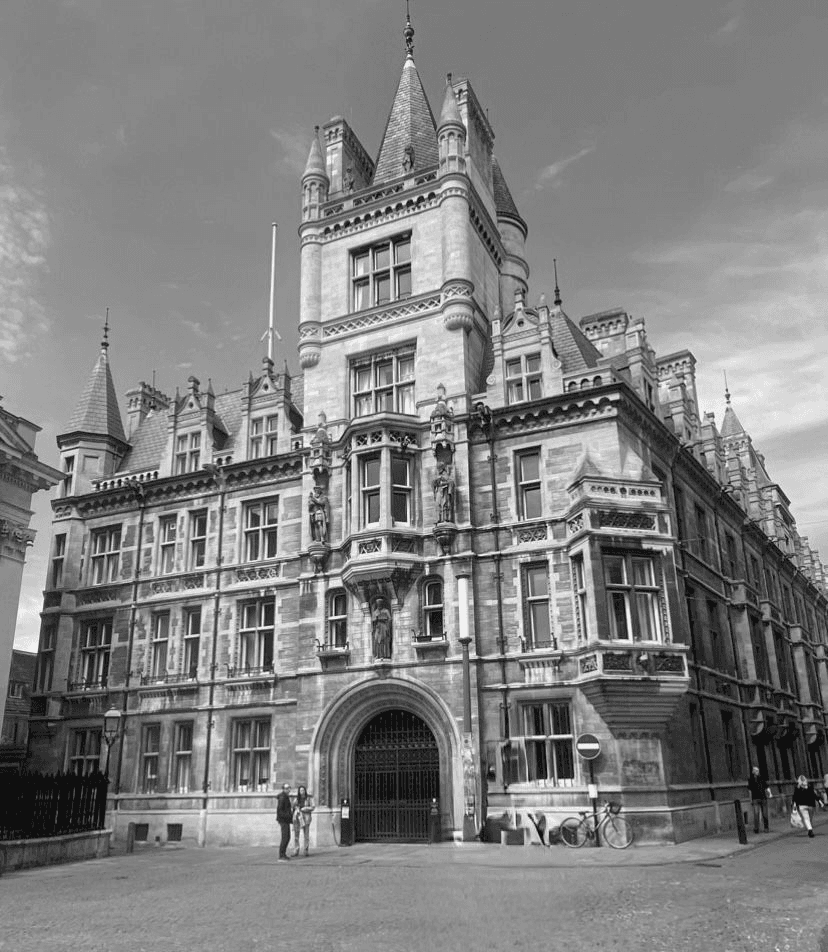

Cambridge AS Level English Language: The Board We Cover
Cambridge is the board this page covers. Every fact here comes from Cambridge International's own 9093 syllabus.
Cambridge
Cambridge AS Level English Language is syllabus 9093, two equally weighted papers, five assessment objectives, and only three of them examined at AS.

How Centaurus Helps Cambridge AS Level English Language Students Excel
Analysis, Not Description
AO3 carries 60 per cent of Paper 1, so every answer names the choice and then the effect it produces.
Precise Quotation
Selecting a word or phrase and commenting on it beats quoting a whole sentence, and it is taught that way.
Style Transformation
Paper 1 asks candidates to write in the same style as a text, or a different one re using its content.
Structure and Organisation
Freytag's Pyramid, dialectical structure and review sections are named techniques the exam rewards.
Every Text Form
Advertisements, editorials, blogs, podcasts, travel writing, diaries and the rest are all covered, because any can appear.
24/7 Progress Reporting
Families get access to the Centaurus Academy LMS, with attendance, progress and lesson notes available to parents, students and teachers at any time.






Why Centaurus Stands Out
Choosing the right Cambridge AS Level English Language support makes a real difference. Here is how Centaurus Academy compares with typical online providers.

Meet our Team Of Experts
Our expert tutors bring deep subject knowledge and a passion for teaching — helping every student reach their full potential.


What Parents Say About Us

Hear from the parents and students who have experienced our personalised teaching first-hand.
Excellent long-term experience
We have an excellent long-term experience with the academy and Sir Awais. Our three children studied with them during different periods and succeeded well. We highly recommend the academy.
Excellent academy
Centaurus Academy is truly one of the best educational institutions I've come across. The environment is nurturing, the staff are incredibly dedicated, and the quality of education is outstanding. They focus not only on academic excellence but also on character building and personal growth. The teachers are supportive and go the extra mile to ensure every student feels confident and motivated.
My child has gained confidence
I'm very satisfied with the dedication and teaching approach. My child has gained confidence and improved significantly in understanding math concepts, thanks to the teacher's clear explanations and supportive guidance.



Cambridge AS Level English Language: Frequently Asked Questions
Explore Tutoring by Country:
Pick your country to see the boards, levels, and subjects our tutors cover near you.




Step Into Your Success
Book a demo lesson today and see how one-on-one tutoring can help your child reach their goals.