



About Cambridge AS Level Chemistry
Cambridge AS Level Chemistry is syllabus 9701. This page works from the syllabus for exams in 2025, 2026 and 2027, version 1. Exams are available in the June and November series, and the syllabus is also available for examination in March for schools in India.
An AS Level candidate sits three papers in the same exam series, and candidates following an AS Level route are eligible for grades a to e. Candidates following an A Level route are eligible for grades A* to E. The AS grade scale stops at e and uses lower case letters.
Paper 1 is Multiple Choice, lasting 1 hour 15 minutes and carrying 40 marks as 40 multiple choice questions on the AS Level content, worth 31% of the AS Level. Paper 2 is AS Level Structured Questions, lasting 1 hour 15 minutes and carrying 60 marks, also on the AS Level content, worth 46%. Paper 3 is Advanced Practical Skills, lasting 2 hours and carrying 40 marks, worth 23%.
Paper 2 is the largest paper, and it is where most of the chemistry is actually written out. Multiple choice rewards recognition quickly, but structured questions reward a candidate who can construct an equation, explain a trend and show working. A student who only drills past multiple choice papers tends to stall at 46% of the qualification.
The content is broader than in most AS sciences, because it is organised into twenty two topics across four branches rather than a single sequence.
Physical chemistry covers topics 1 to 8: atomic structure; atoms, molecules and stoichiometry; chemical bonding; states of matter; chemical energetics; electrochemistry; equilibria; and reaction kinetics.
Inorganic chemistry covers topics 9 to 12: the Periodic Table, chemical periodicity; Group 2; Group 17; and nitrogen and sulfur.
Organic chemistry covers topics 13 to 21: an introduction to AS Level organic chemistry; hydrocarbons; halogen compounds; hydroxy compounds; carbonyl compounds; carboxylic acids and derivatives; nitrogen compounds; polymerisation; and organic synthesis.
Analysis covers topic 22: analytical techniques.
Nine of the twenty two AS topics are organic, which is more organic chemistry than many students expect at this stage. The organic branch runs from the introduction to organic chemistry all the way to synthesis, so by the end of the AS year a candidate is expected to plan a short multi step route rather than simply name a functional group.
A Level candidates carry on to topics 23 to 37, adding chemical energetics, electrochemistry, equilibria and reaction kinetics at a deeper level, Group 2 and the chemistry of transition elements, an introduction to A Level organic chemistry through to organic synthesis, and analytical techniques. The syllabus states that the content of the AS Level learning outcomes is assumed knowledge for the A Level components.
The assessment objectives are three. AO1 is knowledge and understanding. AO2 is handling, applying and evaluating information. AO3 is experimental skills and investigations. The weightings are AO1 at 40 per cent, AO2 at 40 per cent and AO3 at 20 per cent, identical at AS Level and A Level.
Per paper, Paper 1 and Paper 2 are each 50 per cent AO1 and 50 per cent AO2 with nothing on AO3, and Paper 3 is 100 per cent AO3. So the practical paper is the only place a candidate demonstrates experimental skill, and the written papers never ask for it.
Paper 3 is where this qualification differs sharply from other sciences, and the structure is published. It has two or three questions totalling 40 marks. One question is an observational problem in which the candidate investigates an unknown substance or substances in specified experiments, and the substances may be elements, compounds or mixtures. Candidates record their observations, analyse their results and draw conclusions.
Qualitative analysis notes are provided as part of the exam paper for that observational question. That changes what is being tested: identifying an unknown is a matter of recording what is seen accurately and reasoning from a printed reference, not of reciting tests from memory.
The other question or questions are quantitative, involving either a titration or a measurement of a quantity such as time, temperature, mass or gas volume. Candidates draw suitable tables or graphs, analyse the data, perform calculations and draw conclusions. One or more questions may require comment on the accuracy of the procedure, or identifying sources of error and suggesting changes.
The mark allocation for Paper 3 is published as minimum figures rather than fixed ranges. Manipulation, measurement and observation carries a minimum of 12 marks, presentation of data and observations a minimum of 6 marks, and analysis, conclusions and evaluation a minimum of 10 marks. The syllabus states that the remaining 12 marks are allocated across the same skills and may vary from paper to paper.
The syllabus is specific about precision, which is where marks are quietly lost. Candidates should record burette readings to the nearest 0.05 cm³, and when using a thermometer calibrated at 1 °C intervals, temperature readings should be recorded to the nearest 0.5 °C. It also expects candidates to set up apparatus, follow written instructions or diagrams, use apparatus to collect an appropriate quantity of data, and make observations including subtle differences in colour, solubility or quantity of materials.
The quantitative experiments expected are listed by family. Titrations cover acid to alkali work with weak or strong acids and alkalis and the use of indicators, potassium manganate(VII) titrations with hydrogen peroxide, iron(II) ions or ethanedioic acid or its salts, and sodium thiosulfate and iodine titrations. Candidates are expected to set up a burette correctly, carry out a rough titration first, and then titrate until concordant results are obtained.
Rates experiments involve mixing reagents and recording the time for an observation to occur, such as the time taken for a printed cross to be obscured by precipitate when sodium thiosulfate and an acid are mixed. Gravimetric experiments involve heating a solid in a crucible on a pipe clay triangle and recording the mass change, such as finding the water of hydration of a hydrated salt. Thermometric experiments involve accurate thermometer use, such as determining an enthalpy change and applying Hess's law.
One detail is worth a family knowing in advance. If a candidate cannot set up apparatus without help, a Supervisor may assist, but the syllabus is explicit that this help should never go beyond the minimum needed to take some readings, and under no circumstances should help be given with the presentation of data, analysis or evaluation sections. Any assistance must be reported, and a candidate who needed it may not be awarded full credit for collecting data.
Three routes are available. Route 1 is AS Level only, taking Papers 1, 2 and 3 in one series. Route 2 is the A Level staged over two years, taking Papers 1 to 3 in Year 1 and Papers 4 and 5 in Year 2, with the AS result carried forward subject to Cambridge Handbook rules and time limits. Route 3 is the A Level with all five papers in one series.
The qualification is graded a, b, c, d or e for an AS Level candidate.
Who Cambridge AS Level Chemistry 9701 Is For
This course suits students sitting Cambridge AS Level Chemistry 9701 in Year 12 who can balance equations but have not mastered titration precision or identifying an unknown substance under exam conditions.
- Students sitting Cambridge AS Level Chemistry 9701, in the June, November or India March series
- Students taking the AS Level as a stand alone qualification in Year 12
- Students moving from IGCSE or O Level Chemistry into a much larger organic syllabus
- Students who have never carried out a titration to concordant results
- Students whose practical recording loses marks to rounding and units

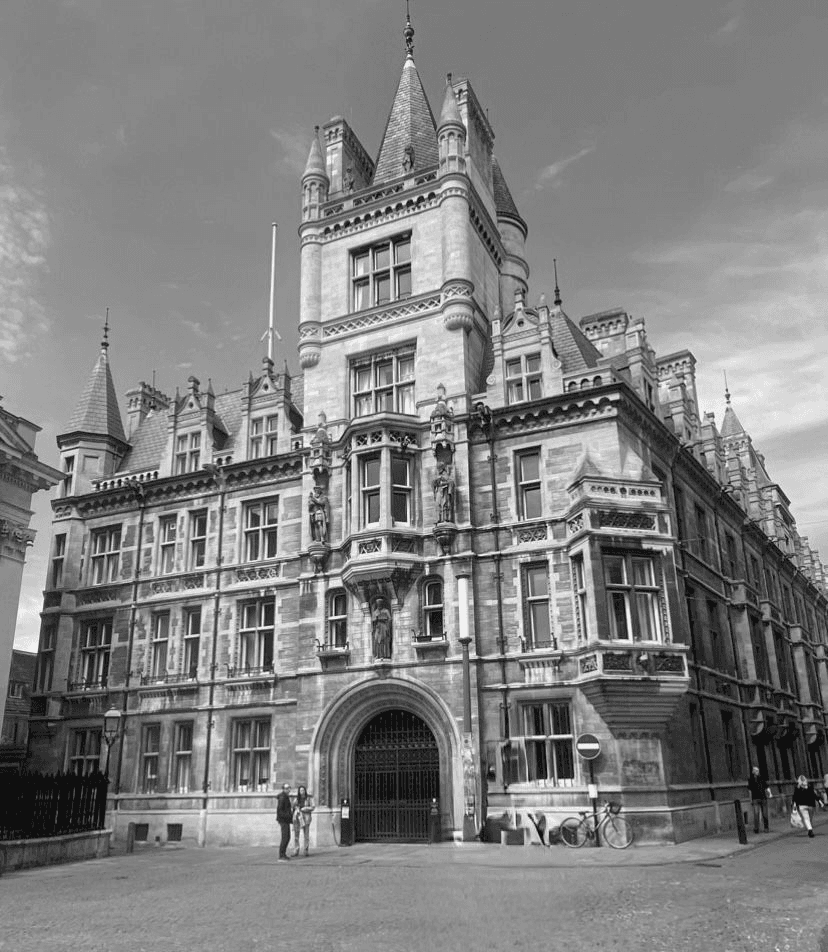

Cambridge AS Level Chemistry: The Board We Cover
Cambridge is the board this page covers. Every fact here comes from Cambridge International's own 9701 syllabus.
Cambridge
Cambridge AS Level Chemistry is syllabus 9701, three papers, twenty two topics, and a laboratory paper built on an unknown substance and a titration.

How Centaurus Helps Cambridge AS Level Chemistry Students Excel
Titration Technique
A rough titration first, then runs until concordant, with burette readings recorded to the nearest 0.05 cm³.
Identifying Unknowns
The observational question is practised with real unknowns, using the qualitative analysis notes supplied in the paper.
Precision and Units
Thermometer readings to the nearest 0.5 °C and correct units are drilled, because marks disappear quietly here.
All Four Branches
Physical, inorganic, organic and analytical chemistry are each taught, including the nine organic AS topics.
Structured Answers
Paper 2 carries 60 marks, more than Paper 1, so equations, trends and working are written out to command words.
24/7 Progress Reporting
Families get access to the Centaurus Academy LMS, with attendance, progress and lesson notes available to parents, students and teachers at any time.




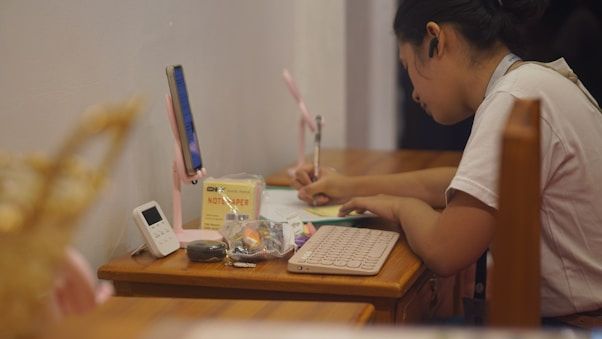

Why Centaurus Stands Out
Choosing the right Cambridge AS Level Chemistry support makes a real difference. Here is how Centaurus Academy compares with typical online providers.

Meet our Team Of Experts
Our expert tutors bring deep subject knowledge and a passion for teaching — helping every student reach their full potential.


What Parents Say About Us

Hear from the parents and students who have experienced our personalised teaching first-hand.
Excellent long-term experience
We have an excellent long-term experience with the academy and Sir Awais. Our three children studied with them during different periods and succeeded well. We highly recommend the academy.
Excellent academy
Centaurus Academy is truly one of the best educational institutions I've come across. The environment is nurturing, the staff are incredibly dedicated, and the quality of education is outstanding. They focus not only on academic excellence but also on character building and personal growth. The teachers are supportive and go the extra mile to ensure every student feels confident and motivated.
My child has gained confidence
I'm very satisfied with the dedication and teaching approach. My child has gained confidence and improved significantly in understanding math concepts, thanks to the teacher's clear explanations and supportive guidance.



Cambridge AS Level Chemistry: Frequently Asked Questions
Explore Tutoring by Country:
Pick your country to see the boards, levels, and subjects our tutors cover near you.




Step Into Your Success
Book a demo lesson today and see how one-on-one tutoring can help your child reach their goals.