



About Cambridge A Level Sociology
Cambridge A Level Sociology is syllabus 9699. This page works from the syllabus for exams in 2027 and 2028. Exams are available in the June and November series, and also in the March series in India.
One fact reassures a lot of families at the start. The syllabus states that it does not expect learners starting this course to have previously studied Sociology. A student arriving from other subjects is not behind by design.
An A Level candidate sits four papers. Papers 1 and 2 are the AS Level papers and Papers 3 and 4 are the A Level papers. Candidates following an A Level route are eligible for grades A* to E.
Paper 1 is Socialisation, Identity and Methods of Research. It lasts 1 hour 30 minutes, carries 60 marks, and asks four questions: three compulsory in Section A and one essay worth 26 marks from a choice of two in Section B. It is worth 25% of the A Level.
Paper 2 is The Family. It is identical in shape, at 1 hour 30 minutes and 60 marks, and is also worth 25% of the A Level.
Paper 3 is Education. It lasts 1 hour 15 minutes and carries 50 marks, with four compulsory questions. It is worth 21% of the A Level.
Paper 4 is Globalisation, Media and Religion. It lasts 1 hour 45 minutes and carries 70 marks, and candidates answer two essay questions worth 35 marks each. It is worth 29% of the A Level.
So the two A Level papers carry 21% and 29%, and the two AS papers carry 25% each. Paper 4 is the single heaviest paper in the qualification.
Paper 3 is the shortest paper but it is not the easiest, because of how its four questions are built. The syllabus says the four questions are worth an increasing number of marks, and the assessment overview states that Question 4 is an essay worth 26 marks.
That means three questions share the remaining marks before the essay. Question 1 is a short answer question demonstrating knowledge. Question 2 asks for two explanations for an issue, theory or viewpoint. Question 3 is based on a sociological view expressed in a quotation, and asks candidates to use sociological material to give two arguments against the view.
So Paper 3 runs from recall, to explanation, to arguing against a position, to a full essay, and the marks grow at each step. In 1 hour 15 minutes that is a demanding sequence, and the essay alone is more than half the paper.
Paper 4 is a different kind of test. It has three sections: Section A Globalisation, Section B Media, and Section C Religion. There are six essay questions, two in each section, and candidates answer two questions, each from a different section.
The instruction attached to those essays is the most useful sentence in the syllabus for this paper. The syllabus states that candidates should explore contrasting views or evidence in order to show an understanding of the issues raised by the questions.
So a Paper 4 essay that presents one perspective thoroughly, however well written, has not done what the paper asks. The requirement is built into the paper, not added by a teacher.
There is also a content rule that saves schools time. A Level candidates must study the syllabus content for Paper 1, Paper 2 and Paper 3, and at least two of the three topic areas for Paper 4. Because the paper asks for two answers from two different sections, a school can teach two of the three areas and nothing is lost.
That makes Paper 4 unusual in this block: it is the only paper where a school may legitimately leave a named topic area untaught.
The assessment objectives are three. AO1 is knowledge and understanding, covering sociological concepts, theories, evidence, views, research methods, arguments and debates; the theoretical and practical considerations that influence the design and execution of research; and relevant sociological research findings.
AO2 is interpretation and application, covering interpreting sociological material and applying it to a range of issues, including using material to support points or develop arguments and demonstrating awareness of the links between concepts, theories and evidence.
AO3 is analysis and evaluation, covering identifying misconceptions, logical flaws and ideological influences; discussing counter viewpoints or evidence to demonstrate the complexity of sociological issues; recognising the limitations of, or bias in, sociological and non sociological evidence; and reaching conclusions based on a reasoned consideration of the evidence and arguments.
At AS Level the weightings are AO1 at 40 per cent, AO2 at 30 per cent and AO3 at 30 per cent.
At A Level they become AO1 at 35 per cent, AO2 at 30 per cent and AO3 at 35 per cent.
So evaluation rises from 30 to 35 per cent and knowledge falls from 40 to 35. The A Level genuinely rewards argued judgement more than the AS does, which is the opposite of what happens in some other Cambridge subjects.
The per-paper figures show where. Papers 1 and 2 are both AO1 at 40 per cent, AO2 at 30 per cent and AO3 at 30 per cent.
Paper 3 is AO1 at 36 per cent, AO2 at 28 per cent and AO3 at 36 per cent. Even on the shortest paper, evaluation is worth as much as knowledge.
Paper 4 is AO1 at 26 per cent, AO2 at 31 per cent and AO3 at 43 per cent. That makes the final paper the most evaluative in the qualification by a wide margin, with the lowest knowledge share.
So a student's grade is largely decided by whether they can weigh competing explanations on paper, not by how much they can recall. The paper worth 29 per cent is nearly half evaluation.
One note on the A Level weighting change is worth recording. For 2027 and 2028 the component weightings were adjusted so that Paper 3 moved from 20 per cent of the A Level to 21 per cent, and Paper 4 from 30 per cent to 29 per cent. A student comparing pages from an older edition may see the previous figures.
The Paper 3 content is two topics. Education and society covers theories about the role of education, education and social mobility, and influences on the curriculum. Education and inequality covers intelligence and educational attainment, social class and educational attainment, ethnicity and educational attainment, and gender and educational attainment.
Those four attainment sub-topics are the heart of Paper 3, and they are where the evaluation marks sit, because rival explanations for differential attainment compete directly with each other.
The Paper 4 content depends on which two areas a school teaches. Globalisation covers key debates, concepts and perspectives, including perspectives on globalisation, globalisation and identity, and globalisation, power and politics, and then contemporary issues, including globalisation poverty and inequalities, globalisation and migration, and globalisation and crime.
Media covers the ownership and control of the media, and media representation and effects. Religion covers religion and social order, and the influence of religion.
The syllabus also notes that some subject content in the Family topic may be taught if appropriate to the local context, at the teacher's discretion, and that this content will not be assessed but may be used by candidates to support their responses.
The qualification requires about 180 guided learning hours for the AS Level and about 360 for the A Level.
There are three routes. Route 1 is AS Level only, taking Papers 1 and 2 in the same exam series. Route 2 is the A Level staged over two years, with Year 1 as the AS Level and Year 2 taking Papers 3 and 4 only. Route 3 is the A Level with all four components in one exam series.
On Route 2, Year 2 is Papers 3 and 4 only, so the AS papers are not retaken. Candidates carry forward their AS Level marks, subject to the rules and time limits described in the Cambridge Handbook.
The qualification is graded A* to E for an A Level candidate. The lower case a to e scale belongs to the AS Level route only.
This page is written for Year 13 students completing the A Level.
Who Cambridge A Level Sociology 9699 Is For
This course suits Year 13 students sitting Cambridge A Level Sociology 9699 who can explain a theory but struggle to set two explanations against each other and reach a reasoned conclusion.
- Year 13 students sitting Papers 3 and 4, or all four papers in one series
- Students who present one perspective where the paper asks for contrasting views
- Students who have not met the attainment debate in Paper 3
- Students who leave the 26 mark essay to the last ten minutes
- Students aiming for sociology, law, politics, social work or education at university

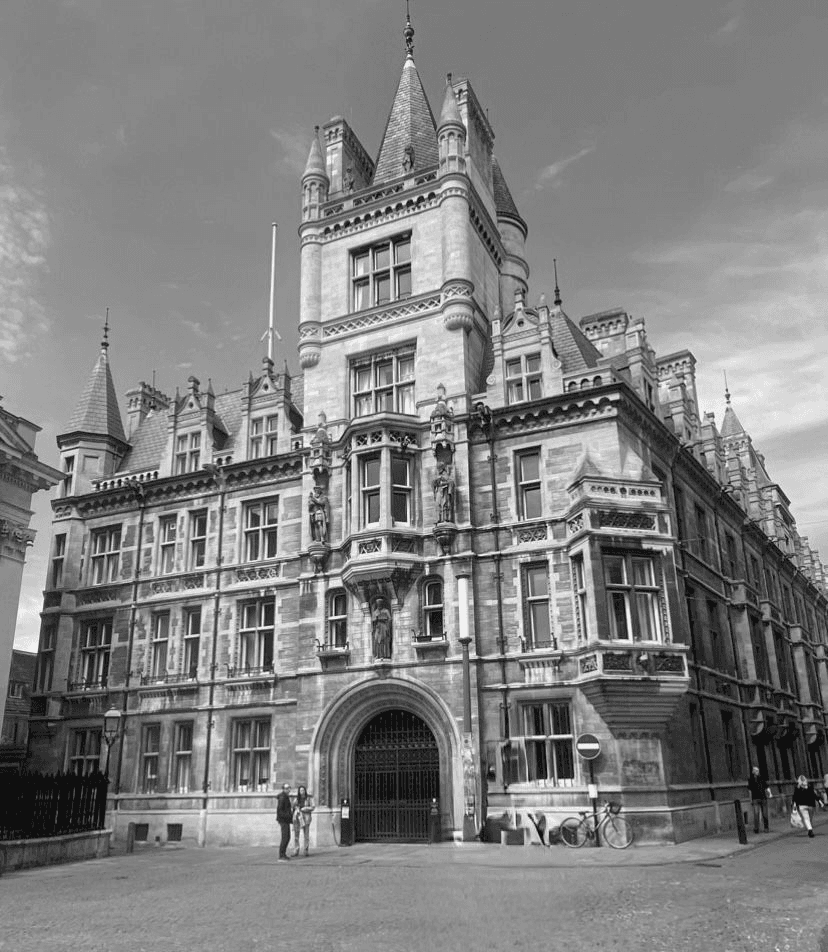

Cambridge A Level Sociology: The Board We Cover
Cambridge is the board this page covers. Every fact here comes from Cambridge International's own 9699 syllabus.
Cambridge
Cambridge A Level Sociology is syllabus 9699, four papers, two topics from three on the final paper, and 43 per cent evaluation there.

How Centaurus Helps Cambridge A Level Sociology Students Excel
Contrasting Views
Paper 4 essays must set competing perspectives against each other, so that is the default structure taught.
Paper 3 Sequence
Recall, explanation, argument against a quotation and then a 26 mark essay, practised in order and to time.
Attainment Debates
Class, ethnicity, gender and intelligence explanations compared rather than listed.
Topic Choice
Globalisation, Media and Religion taught so a school's two chosen areas are covered properly.
Evaluation Weighting
AO3 is 35 per cent overall and 43 per cent of Paper 4, so judgement is taught as the main skill.
24/7 Progress Reporting
Families get access to the Centaurus Academy LMS, with attendance, progress and lesson notes available to parents, students and teachers at any time.






Why Centaurus Stands Out
Choosing the right Cambridge A Level Sociology support makes a real difference. Here is how Centaurus Academy compares with typical online providers.

Meet our Team Of Experts
Our expert tutors bring deep subject knowledge and a passion for teaching — helping every student reach their full potential.


What Parents Say About Us

Hear from the parents and students who have experienced our personalised teaching first-hand.
Excellent long-term experience
We have an excellent long-term experience with the academy and Sir Awais. Our three children studied with them during different periods and succeeded well. We highly recommend the academy.
Excellent academy
Centaurus Academy is truly one of the best educational institutions I've come across. The environment is nurturing, the staff are incredibly dedicated, and the quality of education is outstanding. They focus not only on academic excellence but also on character building and personal growth. The teachers are supportive and go the extra mile to ensure every student feels confident and motivated.
My child has gained confidence
I'm very satisfied with the dedication and teaching approach. My child has gained confidence and improved significantly in understanding math concepts, thanks to the teacher's clear explanations and supportive guidance.



Cambridge A Level Sociology: Frequently Asked Questions
Explore Tutoring by Country:
Pick your country to see the boards, levels, and subjects our tutors cover near you.




Step Into Your Success
Book a demo lesson today and see how one-on-one tutoring can help your child reach their goals.