



About Cambridge A Level Physics
Cambridge A Level Physics is syllabus 9702. This page works from the syllabus for exams in 2025, 2026 and 2027. Exams are available in the June and November series, and also in the March series in India.
An A Level candidate sits five papers. Papers 1, 2 and 3 are the AS Level papers. Papers 4 and 5 are new at A Level, and candidates following an A Level route are eligible for grades A* to E.
The weighting splits close to half and half. Paper 1 at 15.5 per cent, Paper 2 at 23 per cent and Paper 3 at 11.5 per cent add up to half the A Level. Paper 4 at 38.5 per cent and Paper 5 at 11.5 per cent make up the other half.
Paper 1 is Multiple Choice, lasting 1 hour 15 minutes with 40 marks and 40 multiple-choice questions, based on the AS Level syllabus content, and worth 15.5% of the A Level.
Paper 2 is AS Level Structured Questions, lasting 1 hour 15 minutes with 60 marks, also based on AS Level content, and worth 23% of the A Level.
Paper 3 is Advanced Practical Skills, a 2 hour practical test carrying 40 marks and worth 11.5% of the A Level.
Paper 4 is A Level Structured Questions and it carries the most weight of any paper. It lasts 2 hours, carries 100 marks and is worth 38.5% of the A Level. Paper 4 alone outweighs Papers 1 and 2 combined.
Paper 4 is based on the A Level syllabus content, and the syllabus states that knowledge of material from the AS Level syllabus content will be required. Nothing from the first year is finished.
Paper 5 is Planning, Analysis and Evaluation. It lasts 1 hour 15 minutes, carries 30 marks and is worth 11.5% of the A Level. Questions are based on the experimental skills in the Practical assessment section, and the context may be outside the syllabus content.
Physics describes Paper 5 more precisely than the other sciences do, and the detail is worth knowing exactly. Candidates answer two compulsory questions, and the paper consists of two questions each of 15 marks.
Question 1 is a planning question. Candidates design an experimental investigation of a given problem, and the syllabus says the question will not be highly structured. Answers are expected as a diagram plus an extended piece of writing.
Question 2 is an analysis, conclusions and evaluation question. Candidates are given an equation and some experimental data and must find the value of a constant from them. The syllabus says the question will be structured, but candidates will be expected to decide for themselves what they need to do in order to reach an answer. They must also estimate the uncertainty in their answer.
That is the single most useful sentence on the whole page. Paper 5 does not hand over a method. It hands over an equation and data and asks the student to work out the route, then to say how much they trust the result.
Paper 5 is a written paper and the syllabus states it will not require laboratory facilities. It is not a second practical exam, even though it examines practical skills.
The syllabus also warns that Paper 5 questions may be set in areas of physics that are difficult to investigate experimentally in school laboratories, either because of the cost of equipment or because of restrictions on the availability of materials, and it gives radioactive materials as an example. No question will require knowledge of theory or equipment beyond the syllabus, and candidates are given the necessary information for any question set on a topic outside it.
The syllabus is direct about how to prepare for this paper. It says learners cannot be taught to plan experiments effectively unless, on a number of occasions, they are required to plan an experiment, perform the experiment according to their own plan, and then evaluate what they did. Watching a teacher demonstrate is not the same activity.
The assessment objectives are the same three used across the sciences. At A Level the qualification splits AO1 knowledge and understanding at 40 per cent, AO2 handling, applying and evaluating information at 40 per cent, and AO3 experimental skills and investigations at 20 per cent.
Per paper, Papers 1, 2 and 4 are each half AO1 and half AO2 with no AO3 at all, and Papers 3 and 5 are entirely AO3. So all twenty per cent of experimental skill sits in Paper 3 and Paper 5, and the three theory papers reward knowledge and its application only.
The content is where Physics differs most from its sister sciences. AS Level candidates study topics 1 to 11: physical quantities and units; kinematics; dynamics; forces, density and pressure; work, energy and power; deformation of solids; waves; superposition; electricity; direct current circuits; and particle physics.
A Level candidates study all of those and fourteen more. Topic 12 is motion in a circle. Topic 13 is gravitational fields. Topic 14 is temperature. Topic 15 is ideal gases. Topic 16 is thermodynamics. Topic 17 is oscillations. Topic 18 is electric fields. Topic 19 is capacitance. Topic 20 is magnetic fields. Topic 21 is alternating currents. Topic 22 is quantum physics. Topic 23 is nuclear physics. Topic 24 is medical physics. Topic 25 is astronomy and cosmology.
Not one of those fourteen titles repeats an AS title. In Chemistry the second year largely revisits the same families at greater depth. In Physics it opens genuinely new areas, and a student cannot lean on the first year as a template.
Several of them are mathematically heavier than anything in the AS year. Motion in a circle and gravitational fields bring in the relationship between force, radius and speed, and the inverse square law. Capacitance brings exponential discharge. Alternating currents brings root mean square values and reactance. Oscillations brings simple harmonic motion and the mathematics that goes with it.
Two of the fourteen are applied topics rather than core theory. Topic 24 medical physics covers the physics behind imaging and treatment. Topic 25 astronomy and cosmology covers stars, the universe and its scale. Both are areas students often enjoy and often neglect, and both are examined on Paper 4 like everything else.
One structural detail saves memory work and shifts the skill elsewhere. The syllabus publishes a data and formulae sheet, and states that it will appear on page 2 in Papers 1, 2 and 4. So candidates are given the constants and the equations on the three theory papers.
That changes what the marks are for. A student who has memorised formulae gains little, and a student who cannot select the right equation for a situation, rearrange it, and handle units and significant figures loses a great deal. Paper 5 is different again: the equation comes inside the question, on the paper's own terms.
The syllabus also lists mathematical requirements as part of the course, including standard form, calculator use, and performing calculations so that significant figures are neither lost unnecessarily nor carried beyond what is justified. That last point is examined, not assumed.
There are three routes. Route 1 is AS Level only, taking Papers 1, 2 and 3 in the same exam series. Route 2 is the A Level staged over two years, with Year 1 as the AS Level and Year 2 completing the A Level. Route 3 is the A Level with all five components in one exam series.
On Route 2, Year 2 is Papers 4 and 5 only, and the AS papers are not retaken. Candidates carry forward their AS Level result rather than a grade, subject to the rules and time limits described in the Cambridge Handbook.
This is version 1 of the syllabus, published September 2022, and it states that there are no significant changes which affect teaching. It also states that any textbooks endorsed to support the syllabus for examination from 2022 are still suitable for use.
The qualification is graded A* to E for an A Level candidate. The lower case a to e scale belongs to the AS Level route only.
This page is written for Year 13 students completing the A Level.
Who Cambridge A Level Physics 9702 Is For
This course suits Year 13 students sitting Cambridge A Level Physics 9702 who are comfortable with the AS material but have not met circular motion, fields, capacitance or simple harmonic motion before.
- Year 13 students sitting Papers 4 and 5, or all five papers in one series
- Students who memorise formulae instead of choosing them
- Students who cannot design an experiment from a blank page
- Students who never estimate uncertainty and stop at the number
- Students targeting engineering, physics or medicine at university

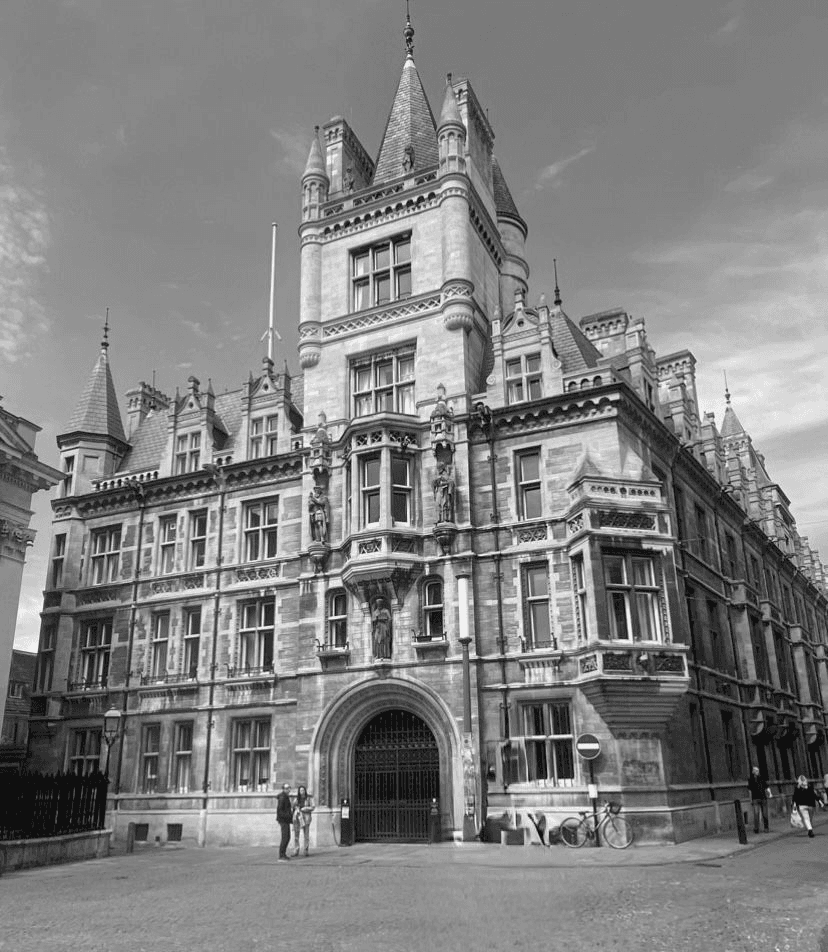

Cambridge A Level Physics: The Board We Cover
Cambridge is the board this page covers. Every fact here comes from Cambridge International's own 9702 syllabus.
Cambridge
Cambridge A Level Physics is syllabus 9702, five papers, fourteen new topics, and a planning question answered with a diagram and extended writing.

How Centaurus Helps Cambridge A Level Physics Students Excel
Paper 4 Priority
One 2 hour paper carries 38.5 per cent, so it gets more teaching time than the other four together allow.
Fourteen New Topics
Circular motion, gravitational and electric fields, capacitance, oscillations, quantum and nuclear physics, medical physics and cosmology.
Equation Selection
The formulae sheet is supplied in Papers 1, 2 and 4, so choosing and rearranging equations is what earns marks.
Paper 5 Planning
Question 1 is 15 marks of planning answered with a diagram and extended writing.
Uncertainty Work
Question 2 asks for the value of a constant and the uncertainty in it, so error work is practised to that standard.
24/7 Progress Reporting
Families get access to the Centaurus Academy LMS, with attendance, progress and lesson notes available to parents, students and teachers at any time.




Why Centaurus Stands Out
Choosing the right Cambridge A Level Physics support makes a real difference. Here is how Centaurus Academy compares with typical online providers.

Meet our Team Of Experts
Our expert tutors bring deep subject knowledge and a passion for teaching — helping every student reach their full potential.


What Parents Say About Us

Hear from the parents and students who have experienced our personalised teaching first-hand.
Excellent long-term experience
We have an excellent long-term experience with the academy and Sir Awais. Our three children studied with them during different periods and succeeded well. We highly recommend the academy.
Excellent academy
Centaurus Academy is truly one of the best educational institutions I've come across. The environment is nurturing, the staff are incredibly dedicated, and the quality of education is outstanding. They focus not only on academic excellence but also on character building and personal growth. The teachers are supportive and go the extra mile to ensure every student feels confident and motivated.
My child has gained confidence
I'm very satisfied with the dedication and teaching approach. My child has gained confidence and improved significantly in understanding math concepts, thanks to the teacher's clear explanations and supportive guidance.



Cambridge A Level Physics: Frequently Asked Questions
Explore Tutoring by Country:
Pick your country to see the boards, levels, and subjects our tutors cover near you.




Step Into Your Success
Book a demo lesson today and see how one-on-one tutoring can help your child reach their goals.