



About Cambridge A Level History
Cambridge A Level History is syllabus 9489. This page works from the syllabus for exams in 2027, 2028 and 2029, which is a revised syllabus for first examination in 2027. Exams are available in the June and November series only, with no March series.
An A Level candidate sits four papers. Papers 1 and 2 are the AS Level papers and Papers 3 and 4 are the A Level papers. Candidates following an A Level route are eligible for grades A* to E.
Paper 1 is Historical Sources. It lasts 1 hour 15 minutes, carries 40 marks, and is worth 20% of the A Level.
Paper 2 is the Outline Study. It lasts 1 hour 45 minutes, carries 60 marks, and is worth 30% of the A Level.
Paper 3 is Historical Interpretations. It lasts 1 hour 15 minutes, carries 40 marks, and is worth 20% of the A Level.
Paper 4 is the Depth Study. It lasts 1 hour 45 minutes, carries 60 marks, and is worth 30% of the A Level.
So the AS papers are half the qualification and the A Level papers are the other half. And two papers are twice the weight of the other two: the two 60 mark papers, Paper 2 and Paper 4, are 30 per cent each, while the two 40 mark papers are 20 per cent each.
There is a symmetry worth noticing straight away. Paper 3 mirrors Paper 1 in length, marks and weighting, and Paper 4 mirrors Paper 2 in exactly the same way. The A Level year repeats the AS year's two paper shapes at a higher level, and then adds one entirely new skill.
That new skill is historical interpretation, and it is the reason this page exists. At AS Level it is worth nothing. At A Level it is worth 50 per cent of Paper 3.
Paper 3 takes one question, and every candidate answers that one question. It is worth 40 marks, which means the whole paper is a single extended answer.
The candidate chooses one of three topics. Topic 1 is the origins of the First World War. Topic 2 is the Holocaust. Topic 3 is the origins and development of the Cold War.
On each of those topics the paper sets one extract of no more than 600 words from an historian's writing. The author of the extract is not identified, and candidates are not asked to identify the author. The question is not who wrote it. It is what the writing reveals.
The command phrase is fixed. What can you learn from this extract about the interpretation and approach of the historian who wrote it, using the extract and your knowledge of the period.
The syllabus defines both terms, and the definitions are the most useful thing a student can memorise for this paper. Interpretation means what can be inferred from the extract about the nature of the historian's claims and conclusions. Approach means what the historian brings to their study of the topic: what they are interested in, the questions they ask, and how these reflect their own ideology and beliefs.
It then says something reassuring and practical. Interpretation and approach are closely interrelated, no distinction between them is required, and candidates are not required to distinguish between the two. So a student does not need to force a separation that the writing itself does not make.
There is one instruction that catches candidates out, and it is specific. Responses should consider the interpretation as a whole, rather than engaging with elements within the interpretation that can be considered sub-messages. A student who picks at one sentence for 40 marks has misread the task.
Historical knowledge still matters on Paper 3. It must be used to support the consideration of interpretation and approach, and it must be accurate, detailed and relevant. The paper is not a comprehension exercise.
Paper 4 is a different animal, and it should feel familiar because it is Paper 2 again. It lasts 1 hour 45 minutes, carries 60 marks, and candidates answer two questions from one section only, each worth 30 marks.
The three Paper 4 options are European history 1919 to 1941, The USA 1945 to 1993, and International history 1909 to 1994.
Those periods are not the same as the AS options, which run from 1774 to 1941 across the three options. So the A Level content is a different span of history rather than a continuation, and a student should not assume their AS topics carry into Paper 4.
Paper 4 uses only two command words: Assess and Evaluate. Assess means make an informed judgement. Evaluate means judge the quality, importance, amount or value of something.
The demands attached to those words are precise. Paper 4 questions require a balanced analysis of the issue by considering a range of reasons, arguments and points. Candidates should establish valid criteria for assessment and use appropriately selected and precise historical knowledge to support the argument.
So the syllabus asks for criteria before judgement. A student who decides at the top of the essay and then builds backwards has skipped the step the mark scheme rewards. Deciding what would count as important, or significant, or successful, and then judging against it, is the shape of a strong Paper 4 answer.
The syllabus adds that some questions require consideration of alternative views, while others require an analysis of a range of reasons to reach a conclusion, and that answers should include consideration of the extent or significance of the issue in the question.
The assessment objectives are four. AO1 is historical knowledge: recall, select and use appropriate historical knowledge.
AO2 is historical explanation, analysis and judgement: identifying, explaining and analysing the past using cause and consequence, change and continuity, and significance; explaining and analysing connections between different aspects of the past; and reaching a judgement.
AO3 is historical sources: understanding, analysing, evaluating and interpreting a range of historical sources in context.
AO4 is historical interpretations: understanding, explaining and analysing how historians have interpreted and approached aspects of the past.
At A Level the weightings are AO1 at 45 per cent, AO2 at 30 per cent, AO3 at 15 per cent and AO4 at 10 per cent.
Per paper the picture is much clearer than those overall figures. Paper 3 is AO1 at 50 per cent and AO4 at 50 per cent, with nothing else.
Paper 4 is AO1 at 50 per cent and AO2 at 50 per cent, with nothing else, which is exactly the same split as Paper 2.
So neither A Level paper assesses source work at all. AO3 sources is worth 30 per cent at AS Level and is examined on Paper 1 only. It falls to 15 per cent of the overall A Level and appears on no A Level paper.
The conclusion for a family is straightforward. The source and comparison technique that fills Paper 1 is finished at the end of Year 12. Year 13 replaces it with two new things: reading a historian's argument for what it reveals, and judging a question against criteria the student sets themselves.
The revised syllabus for 2027 changed the content and two AS topics were removed, so older papers contain material that is no longer examined. The syllabus states that all topics were revised and exemplified, with minor changes to key questions, date ranges and content, and that some topics were introduced and some restructured.
There are three routes. Route 1 is AS Level only, taking Papers 1 and 2 in the same exam series. Route 2 is the A Level staged over two years, with Year 1 as the AS Level and Year 2 taking Papers 3 and 4 only. Route 3 is the A Level with all four components in one exam series.
On Route 2, Year 2 is Papers 3 and 4 only, so the AS papers are not retaken. Candidates carry forward their AS Level marks, subject to the rules and time limits described in the Cambridge Handbook.
The qualification is graded A* to E for an A Level candidate. The lower case a to e scale belongs to the AS Level route only.
This page is written for Year 13 students completing the A Level.
Who Cambridge A Level History 9489 Is For
This course suits Year 13 students sitting Cambridge A Level History 9489 who can argue about the past but have never been asked what a historian's writing reveals about the historian, or to set their own criteria for a judgement.
- Year 13 students sitting Papers 3 and 4, or all four papers in one series
- Students who have never written about an interpretation before
- Students who pick at one sentence of an extract instead of reading it whole
- Students who decide before they set any criteria
- Students aiming for history, law, politics or any research-based degree

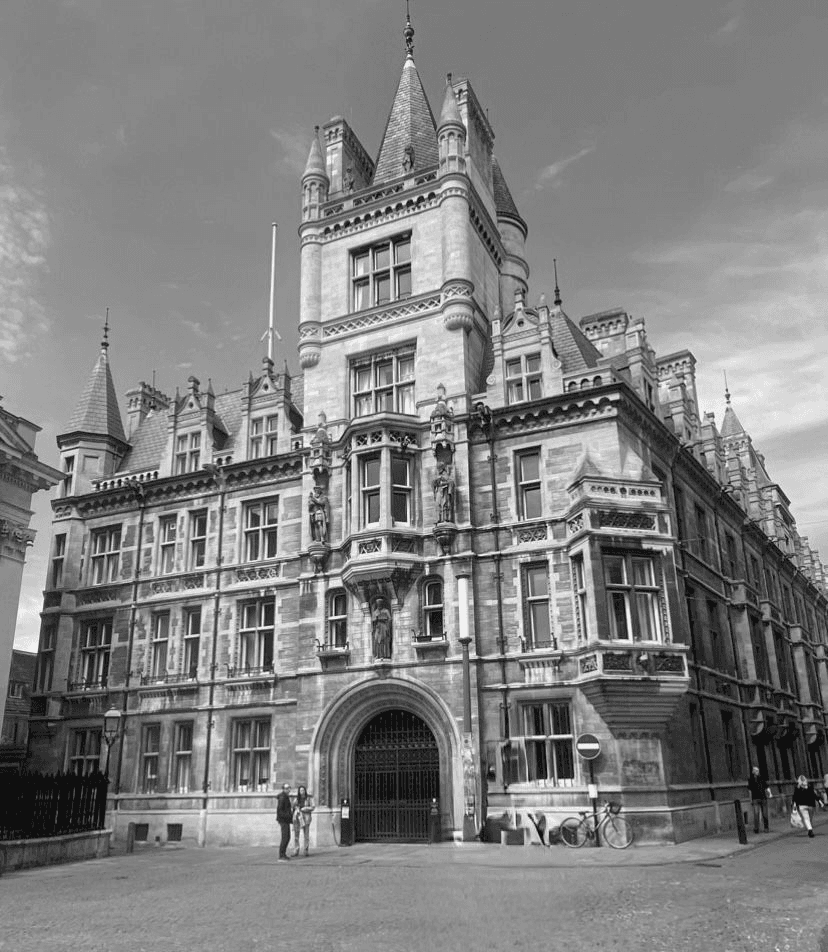

Cambridge A Level History: The Board We Cover
Cambridge is the board this page covers. Every fact here comes from Cambridge International's own 9489 syllabus.
Cambridge
Cambridge A Level History is syllabus 9489, four papers, one unnamed 600 word extract worth 40 marks, and no source paper at A Level.

How Centaurus Helps Cambridge A Level History Students Excel
One Extract, 40 Marks
Paper 3 is a single answer on a 600 word historian's extract, so every paragraph must earn its place.
Interpretation and Approach
Both terms defined and practised, without forcing a distinction the syllabus says is unnecessary.
The Whole Argument
Students are trained to read the extract as a whole rather than chase sub-messages.
Criteria First
Paper 4 rewards valid criteria for assessment before the judgement, so that order is drilled.
New Periods
1919 to 1941, the USA 1945 to 1993 and International history 1909 to 1994 taught as new content.
24/7 Progress Reporting
Families get access to the Centaurus Academy LMS, with attendance, progress and lesson notes available to parents, students and teachers at any time.





Why Centaurus Stands Out
Choosing the right Cambridge A Level History support makes a real difference. Here is how Centaurus Academy compares with typical online providers.

Meet our Team Of Experts
Our expert tutors bring deep subject knowledge and a passion for teaching — helping every student reach their full potential.


What Parents Say About Us

Hear from the parents and students who have experienced our personalised teaching first-hand.
Excellent long-term experience
We have an excellent long-term experience with the academy and Sir Awais. Our three children studied with them during different periods and succeeded well. We highly recommend the academy.
Excellent academy
Centaurus Academy is truly one of the best educational institutions I've come across. The environment is nurturing, the staff are incredibly dedicated, and the quality of education is outstanding. They focus not only on academic excellence but also on character building and personal growth. The teachers are supportive and go the extra mile to ensure every student feels confident and motivated.
My child has gained confidence
I'm very satisfied with the dedication and teaching approach. My child has gained confidence and improved significantly in understanding math concepts, thanks to the teacher's clear explanations and supportive guidance.



Cambridge A Level History: Frequently Asked Questions
Explore Tutoring by Country:
Pick your country to see the boards, levels, and subjects our tutors cover near you.




Step Into Your Success
Book a demo lesson today and see how one-on-one tutoring can help your child reach their goals.