



About Cambridge A Level Geography
Cambridge A Level Geography is syllabus 9696. This page works from the syllabus for exams in 2027, 2028 and 2029, which is a revised syllabus for first examination in 2027. Exams are available in the June and November series only, with no March series.
An A Level candidate sits four compulsory papers. Papers 1 and 2 are the AS Level papers and Papers 3 and 4 are the A Level papers. Candidates following an A Level route are eligible for grades A* to E.
Paper 1 is Physical Geography and Paper 2 is Human Geography. Each lasts 1 hour 30 minutes, carries 60 marks, and is worth 25% of the A Level.
Paper 3 is Global Environments. It lasts 1 hour 30 minutes, carries 60 marks, and is worth 25% of the A Level.
Paper 4 is Global Themes. It lasts 1 hour 30 minutes, carries 60 marks, and is worth 25% of the A Level.
So all four papers are identical in size, length and weight. That is the most even qualification in the Cambridge block, and it means the A Level is genuinely decided by two papers of your own choosing.
Both A Level papers work the same way. Candidates choose two topics from four. Each chosen topic consists of one compulsory structured question worth 10 marks, and a choice of one of two essay questions worth 20 marks each.
So on each paper a student answers two structured questions and two essays, and the four answers together make up 60 marks. The essay is worth twice the structured question, which makes essays two thirds of each topic.
That structure is worth planning against, because it means a student who is strong on essays but weak on resource interpretation still takes two thirds of the paper from essays alone.
Two things change from the AS papers. All the resources for the A Level papers are supplied in an insert rather than printed on the question paper, and candidates answer on a separate answer booklet.
So a student writing an A Level paper is working from two documents at once. Reading the insert is part of the task, not a preliminary to it.
The assessment objectives are where the A Level differs most from the AS, and the difference is dramatic.
AO1 is knowledge and understanding. AO2 is skills and analysis, covering analysing and interpreting geographical information and recognising its limitations, using quantitative and qualitative data to identify patterns and relationships, using diagrams and sketch maps to communicate, applying knowledge to unfamiliar contexts, and reaching conclusions supported with evidence.
AO3 is evaluation, covering the importance of geographical factors, processes and change; the impact of different values and attitudes of different groups in managing environments; the options available to decision makers; the relative success or failure of initiatives and management strategies; the strengths and weaknesses of principles, theories and models; and presenting logical, structured, coherent and evidence based arguments.
At A Level the qualification splits AO1 at 50 per cent, AO2 at 24 per cent and AO3 at 26 per cent.
Per paper the figures are sharper still. Papers 3 and 4 are both AO1 at 47 per cent, AO2 at 13 per cent and AO3 at 40 per cent.
Compare that with the AS papers, which are 53 per cent knowledge, 35 per cent skills and 12 per cent evaluation. The weighting is almost inverted.
So the same qualification asks two different things at two levels. In Year 12 the marks sit in knowing the material and handling data, and evaluation is a small share. In Year 13 evaluation becomes 40 per cent of each paper and skills and analysis falls to 13 per cent.
A student who was coached to interpret resources carefully and describe patterns accurately, exactly the right approach at AS, will lose marks at A Level unless they add decision making. The A Level papers want to know what should be done, by whom, and whether it worked.
That is visible in the AO3 wording itself. It talks about the options available to decision makers, and the relative success or failure of initiatives and management strategies. Both are judgement tasks, not description tasks.
The content is eight topics, four for each A Level paper. Paper 3 Global Environments draws on tropical environments, coastal environments, hazardous environments and arid environments. Candidates study two of those four.
Topic 7 Tropical environments covers tropical climates; processes and landforms in tropical environments; vegetation, soils and ecosystems in tropical environments; and changes and challenges in tropical environments.
Topic 8 Coastal environments covers coastal processes; the characteristics and formation of coastal landforms; coral reefs; and physical and human challenges to the coastal environment.
Topic 9 Hazardous environments covers earthquake and volcanic hazards and impacts; tropical cyclone hazards and impacts; wildfire hazards and impacts; and challenges in multi-hazard environments.
Topic 10 Arid environments covers arid climates; processes and landforms in arid environments; vegetation and soils in arid environments; and changes and challenges in arid environments.
Paper 4 Global Themes draws on climate change impacts and governance, environmental issues and management, trade aid and tourism, and disease and geography. Candidates study two of those four.
Topic 11 Climate change impacts and governance covers our future global climate; socio-economic impacts of climate change; and the governance of climate change.
Topic 12 Environmental issues and management covers energy supplies; pollution and environmental degradation in rural areas; and pollution and environmental degradation in urban areas.
Topic 13 Trade, aid and tourism covers global trade patterns and change; international organisations involved in trade and aid; and international tourism.
Topic 14 Disease and geography covers the distribution of diseases; pathogenic diseases their spread and impacts; and monitoring and response to pathogenic diseases.
So across the two A Level papers a student studies four topics out of eight and is examined on exactly those four. A school that teaches all eight has over-prepared, and a school that teaches only three has a problem, because the papers require two topics each.
The revised syllabus for 2027 changed this material substantially, and the changes matter because older papers do not match. Hazardous environments gained a new sub-topic on wildfire hazards, which is now 9.3. Hot arid and semi arid environments was renamed arid environments and revised.
On Paper 4, climate change impacts and governance and disease and geography are both new topics, environmental management became environmental issues and management and was reorganised, and global interdependence became trade aid and tourism and was significantly revised. The topics production location and change, and economic transition, were removed entirely.
The assessment objectives were also reorganised for 2027. The old AO1 knowledge and the old AO2 understanding were combined into AO1 knowledge and understanding, the old AO3 skills became AO2 skills and analysis, and the old AO4 evaluation became AO3 evaluation.
Examples remain compulsory. Candidates are expected to support answers with examples drawn from a range of countries that are different in location, environment, climate or human factors, and the syllabus allows examples that are not located places, such as a hard engineering method, a landform, an economic factor or a type of pollution.
There are three routes. Route 1 is AS Level only. Route 2 is the A Level staged over two years, with Year 1 as the AS Level and Year 2 taking Papers 3 and 4. Route 3 is the A Level with all four components in one exam series.
On Route 2, Papers 1 and 2 must be taken in the same exam series, and Papers 3 and 4 must also be taken in the same exam series, though that series may be a later one. Candidates carry forward their AS Level marks, subject to the rules and time limits described in the Cambridge Handbook.
The qualification is graded A* to E for an A Level candidate. The lower case a to e scale belongs to the AS Level route only.
This page is written for Year 13 students completing the A Level.
Who Cambridge A Level Geography 9696 Is For
This course suits Year 13 students sitting Cambridge A Level Geography 9696 who are accurate on data and description but have never been asked to decide, recommend or judge whether a strategy worked.
- Year 13 students sitting Papers 3 and 4, or all four papers in one series
- Students still writing AS style answers, heavy on description and light on decision
- Students whose school has not chosen which four topics to teach
- Students who ignore the insert and write from memory
- Students aiming for geography, environmental science, planning or international development at university

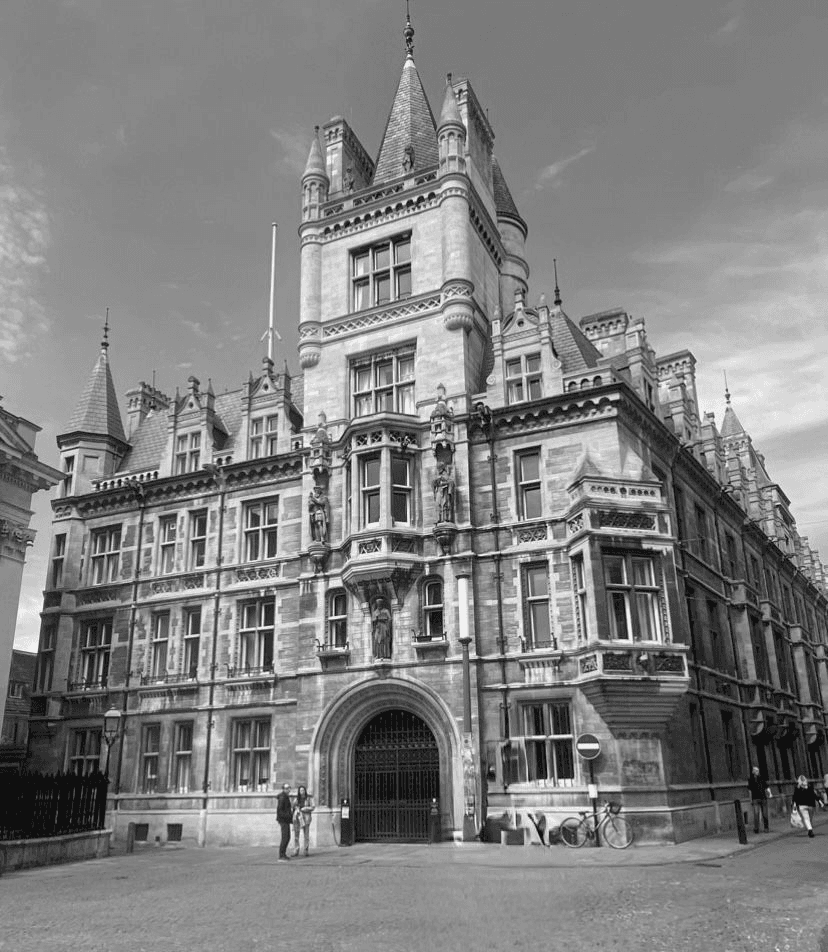

Cambridge A Level Geography: The Board We Cover
Cambridge is the board this page covers. Every fact here comes from Cambridge International's own 9696 syllabus.
Cambridge
Cambridge A Level Geography is syllabus 9696, four even papers, four topics chosen from eight, and evaluation at 40 per cent.

How Centaurus Helps Cambridge A Level Geography Students Excel
Two of Four
Tropical, coastal, hazardous and arid on Paper 3; climate, environmental issues, trade and disease on Paper 4.
Decision Making
Evaluation is 40 per cent of each A Level paper, so options for decision makers and the success of strategies are drilled.
The Insert
Resources are read from a separate insert and answered in a separate booklet, so both documents are managed.
Essay Weight
Each essay is worth twice the structured question, so two thirds of every topic is written argument.
2027 Revision
Wildfire hazards, the renamed arid environments and the two new global themes are taught to the current syllabus.
24/7 Progress Reporting
Families get access to the Centaurus Academy LMS, with attendance, progress and lesson notes available to parents, students and teachers at any time.






Why Centaurus Stands Out
Choosing the right Cambridge A Level Geography support makes a real difference. Here is how Centaurus Academy compares with typical online providers.

Meet our Team Of Experts
Our expert tutors bring deep subject knowledge and a passion for teaching — helping every student reach their full potential.


What Parents Say About Us

Hear from the parents and students who have experienced our personalised teaching first-hand.
Excellent long-term experience
We have an excellent long-term experience with the academy and Sir Awais. Our three children studied with them during different periods and succeeded well. We highly recommend the academy.
Excellent academy
Centaurus Academy is truly one of the best educational institutions I've come across. The environment is nurturing, the staff are incredibly dedicated, and the quality of education is outstanding. They focus not only on academic excellence but also on character building and personal growth. The teachers are supportive and go the extra mile to ensure every student feels confident and motivated.
My child has gained confidence
I'm very satisfied with the dedication and teaching approach. My child has gained confidence and improved significantly in understanding math concepts, thanks to the teacher's clear explanations and supportive guidance.



Cambridge A Level Geography: Frequently Asked Questions
Explore Tutoring by Country:
Pick your country to see the boards, levels, and subjects our tutors cover near you.




Step Into Your Success
Book a demo lesson today and see how one-on-one tutoring can help your child reach their goals.