



About Cambridge A Level English Literature
Cambridge A Level English Literature is syllabus 9695, Literature in English. This page works from the syllabus for exams in 2027 and 2028. Exams are available in the June and November series only.
One line in the syllabus settles the exam series question: this syllabus is no longer available for exams in the March series. So there is no March sitting at all, which matters for candidates in India who sit other Cambridge subjects in March.
An A Level candidate sits four papers. Papers 1 and 2 are the AS Level papers and Papers 3 and 4 are the A Level papers. Candidates following an A Level route are eligible for grades A* to E.
All four papers are identical in size and weight. Each lasts 2 hours, carries 50 marks, and is worth 25% of the A Level. There is no heavier paper and no lighter one, so a student cannot trade a weakness on one paper against strength on another.
Paper 1 is Drama and Poetry. Candidates answer two questions, one from Section A: Drama and one from Section B: Poetry.
Paper 2 is Prose and Unseen. Candidates answer two questions, one from Section A: Prose and one from Section B: Unseen.
Paper 3 is Shakespeare and Drama. Candidates answer two questions, one from Section A: Shakespeare and one from Section B: Drama.
Paper 4 is Pre- and Post-1900 Poetry and Prose. Candidates answer two questions, one from Section A: Pre-1900 Poetry and Prose and one from Section B: Post-1900 Poetry and Prose.
Each A Level paper has two sections, and each section is worth 25 marks. So a Paper 3 answer on Shakespeare and a Paper 3 answer on Drama carry exactly the same weight.
The text load is the first thing a family should understand. At AS Level learners study three set texts and prepare for one unseen text. At A Level they study four further set texts.
That makes seven set texts across the two years, plus the unseen preparation. The four A Level texts sit on Papers 3 and 4, two on each paper, and they are chosen from the published lists rather than set by the school.
The assessment objectives are five, and the way they shift is the most useful thing on this page.
AO1 is knowledge and understanding: responding with understanding to literary texts in a variety of forms from different cultures, with an appreciation of relevant contexts that illuminate readings.
AO2 is analysis: analysing the ways in which writers' choices of language, form and structure shape meanings and effects.
AO3 is personal response: producing informed independent opinions and interpretations of literary texts.
AO4 is communication: communicating a relevant, structured and supported response appropriate to literary study.
AO5 is evaluation of opinion: discussing and evaluating varying opinions and interpretations of literary texts.
At AS Level the weightings are AO1, AO2, AO3 and AO4 at 25 per cent each, and AO5 at zero.
At A Level all five objectives are worth 20 per cent each.
So AO5 appears from nothing and immediately takes a fifth of the qualification, and the other four each give up five percentage points to make room. Every question on Paper 3 and every question on Paper 4 assesses all five objectives.
That has a direct consequence for how a student should write. A candidate who offers only personal response and close analysis has used two of the five objectives and left three partly unaddressed. The syllabus is asking for engagement with other readers' interpretations, and it now pays 20 per cent.
The other consequence is harder for families. A student who reads only the set text, and never reads criticism or considers how other readers have taken it, is leaving a fifth of the A Level untouched.
Paper 3 and Paper 4 also give candidates a choice of question on each set text. On each set text there are two questions, (a) or (b), and each requires an essay length response. The (b) question is based on a passage or a poem from the set text printed on the question paper. Candidates choose which type to answer.
So a student can answer a passage-based question, which invites close reading of a printed extract, or the alternative, which is not passage based. Choosing deliberately between those two is a real skill, and choosing the same way every time is usually a mistake.
These papers are closed book. Set texts are not allowed in the examination room, and dictionaries may not be used. That applies on Paper 3 and Paper 4 exactly as it does on the AS papers.
The printed passage in the (b) question is therefore the only text in the room, which raises the value of knowing the book well enough to place an extract in its context without holding it.
Paper 4 adds a structural rule that catches candidates out. Candidates must write one essay on a poetry set text and one essay on a prose set text, one from each section. Because both sections contain poetry and prose, a student who picks a poetry text in Section A is then obliged to pick a prose text in Section B, and the reverse.
In other words the choice is not free. Three poetry options sit in Section A for 2027 and three prose options, so picking two poetry texts is impossible however much the student likes poetry.
Now the texts. For examination in 2027, Paper 3 Section A Shakespeare offers Henry IV, Part 1 and The Taming of the Shrew. Section B Drama offers Lynn Nottage's Sweat, Wole Soyinka's Kongi's Harvest, and Timberlake Wertenbaker's Our Country's Good.
For 2027, Paper 4 Section A, Pre-1900 Poetry and Prose, offers Jane Austen's Mansfield Park, selected poems from Lord Byron's Selected Poetry, Geoffrey Chaucer's The Wife of Bath's Prologue and Tale, George Eliot's Middlemarch, Thomas Hardy's Jude the Obscure, and selected sonnets by William Shakespeare.
For 2027, Paper 4 Section B, Post-1900 Poetry and Prose, offers selected poems from Elizabeth Bishop's Poems, J M Coetzee's Waiting for the Barbarians, selected stories by Katherine Mansfield, selected poems from Gabriel Okara's Collected Poems, Richard Powers's The Overstory, and selected poems from Ocean Vuong's Night Sky with Exit Wounds.
The 2028 lists differ, and four texts change. On Paper 3, Section A becomes Henry IV, Part 1 and The Winter's Tale, and Section B becomes David Greig's Dunsinane, Tracy Letts's August: Osage County, and Timberlake Wertenbaker's Our Country's Good.
On Paper 4 for 2028, Section A keeps Austen, Byron, Chaucer, Hardy and the Shakespeare sonnets but replaces Middlemarch with Charles Dickens's A Tale of Two Cities. Section B keeps Bishop, Coetzee, Mansfield, Powers and Vuong but replaces Okara with selected poems from Chinua Achebe's Collected Poems.
The syllabus warns that set texts regularly rotate and may change from one year of examination to the next, and tells teachers to check the list for the year in which their candidates will sit. That advice is worth following literally, because a school teaching from the wrong year's list will prepare students for a paper they are not sitting.
There are three routes. Route 1 is AS Level only, taking Papers 1 and 2 in the same exam series. Route 2 is the A Level staged over two years, with Year 1 as the AS Level and Year 2 taking Papers 3 and 4 only. Route 3 is the A Level with all four components in one exam series.
On Route 2, Year 2 is Papers 3 and 4 only, so the AS papers are not retaken. Candidates carry forward their AS Level marks, subject to the rules and time limits described in the Cambridge Handbook.
The qualification is graded A* to E for an A Level candidate. The lower case a to e scale belongs to the AS Level route only.
This page is written for Year 13 students completing the A Level.
Who Cambridge A Level English Literature 9695 Is For
This course suits Year 13 students sitting Cambridge A Level English Literature 9695 who write well about a text but have never weighed another reader's interpretation, or who are working from the wrong year's text list.
- Year 13 students sitting Papers 3 and 4, or all four papers in one series
- Students who never read criticism and cannot meet AO5
- Students who always choose the same style of question on every text
- Students who do not know which year's set text list their exam uses
- Students aiming for English, law, history or any essay-based degree

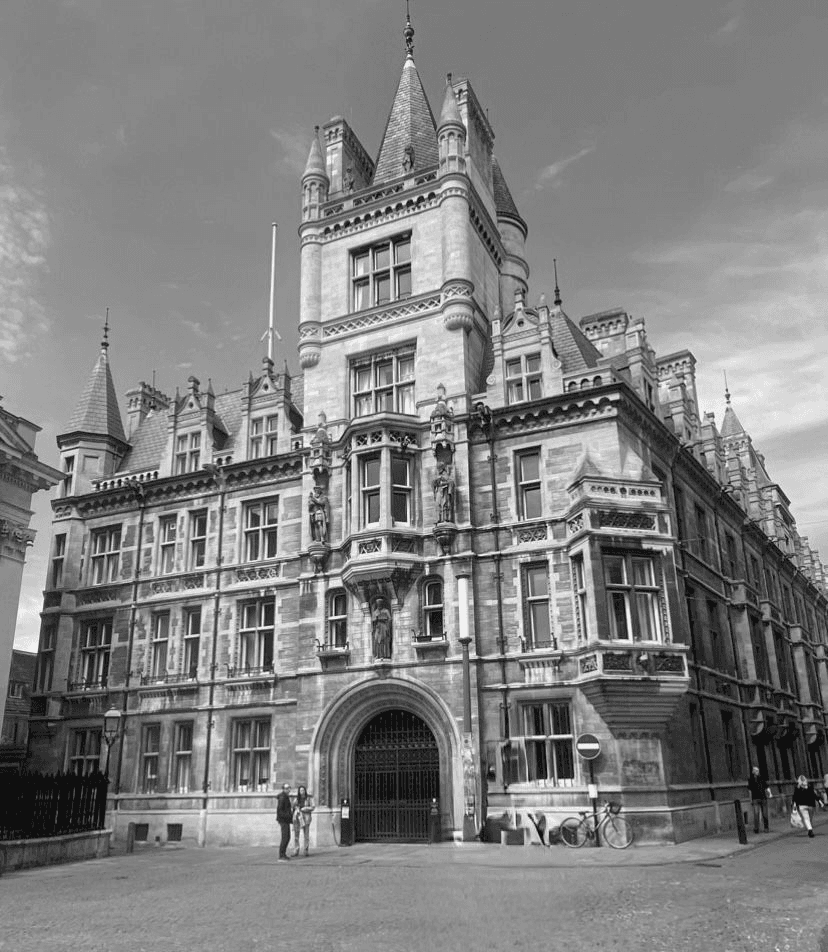

Cambridge A Level English Literature: The Board We Cover
Cambridge is the board this page covers. Every fact here comes from Cambridge International's own 9695 syllabus.
Cambridge
Cambridge A Level English Literature is syllabus 9695, four even papers, seven set texts, and evaluation worth 20 per cent only at A Level.

How Centaurus Helps Cambridge A Level English Literature Students Excel
Evaluation of Opinion
AO5 moves from zero at AS to 20 per cent at A Level, so criticism and counter readings are taught deliberately.
The Two Text Rule
Paper 4 requires one poetry and one prose essay from different sections, so the choice is planned before the exam.
Passage or Essay
Students learn when the printed passage question suits them and when the alternative does better.
Closed Book Methods
Texts and dictionaries are banned, so recall and quotation are trained without the book in hand.
Correct Text List
The 2027 and 2028 lists differ in four places, so every student is checked against the right year.
24/7 Progress Reporting
Families get access to the Centaurus Academy LMS, with attendance, progress and lesson notes available to parents, students and teachers at any time.






Why Centaurus Stands Out
Choosing the right Cambridge A Level English Literature support makes a real difference. Here is how Centaurus Academy compares with typical online providers.

Meet our Team Of Experts
Our expert tutors bring deep subject knowledge and a passion for teaching — helping every student reach their full potential.


What Parents Say About Us

Hear from the parents and students who have experienced our personalised teaching first-hand.
Excellent long-term experience
We have an excellent long-term experience with the academy and Sir Awais. Our three children studied with them during different periods and succeeded well. We highly recommend the academy.
Excellent academy
Centaurus Academy is truly one of the best educational institutions I've come across. The environment is nurturing, the staff are incredibly dedicated, and the quality of education is outstanding. They focus not only on academic excellence but also on character building and personal growth. The teachers are supportive and go the extra mile to ensure every student feels confident and motivated.
My child has gained confidence
I'm very satisfied with the dedication and teaching approach. My child has gained confidence and improved significantly in understanding math concepts, thanks to the teacher's clear explanations and supportive guidance.



Cambridge A Level English Literature: Frequently Asked Questions
Explore Tutoring by Country:
Pick your country to see the boards, levels, and subjects our tutors cover near you.




Step Into Your Success
Book a demo lesson today and see how one-on-one tutoring can help your child reach their goals.