



About Cambridge A Level Computer Science
Cambridge A Level Computer Science is syllabus 9618. This page works from the syllabus for exams in 2027, 2028 and 2029. Exams are available in the June and November series.
At AS Level candidates take Papers 1 and 2. At A Level candidates take all four papers. Candidates following an A Level route are eligible for grades A* to E.
One rule applies to the whole qualification and is easy to overlook: calculators must not be used in any paper. That is stated before any paper is described.
There is also a clean fact about size. Every paper in this qualification is worth 75 marks. There is no smaller paper and no larger one, at either level.
Paper 1 is Theory Fundamentals. It lasts 1 hour 30 minutes, carries 75 marks, and assesses sections 1 to 8 of the syllabus content. It is a written paper and candidates answer all questions. It is worth 50% of the AS Level and 25% of the A Level.
Paper 2 is Fundamental Problem-solving and Programming Skills. It lasts 2 hours and carries 75 marks, assessing sections 9 to 12. Candidates write their answers in pseudocode. It is worth 50% of the AS Level and 25% of the A Level.
Paper 3 is Advanced Theory. It lasts 1 hour 30 minutes, carries 75 marks, and assesses sections 13 to 20. It is a written paper and candidates answer all questions. It is worth 25% of the A Level.
Paper 4 is Practical. It lasts 2 hours 30 minutes and carries 75 marks. It is worth 25% of the A Level.
So the four papers are worth 25% of the A Level each. The AS papers are exactly half the qualification and the two A Level papers are the other half, and no paper can be carried or traded against another.
Paper 4 is the paper that separates this qualification from its AS Level, and its rules are specific enough to be worth setting out in full.
Paper 4 assesses sections 19 and 20 of the syllabus content, except for low-level and declarative programming. Candidates submit complete program code and evidence of testing. They must use Java in console mode, Visual Basic in console mode, or Python in console mode.
Visual Basic here means any .Net version of the language. The syllabus says candidates should use one of those versions and not Visual Basic 6.0 or any earlier version.
Candidates answer all questions on a computer, without internet or email facility. The paper is externally assessed, and the syllabus points centres to the samples database for submission information, forms and deadlines.
That combination, complete program code plus evidence of testing, is a submission and not just an exam. A student who writes correct code but keeps no record of the testing will lose marks on the evidence.
Sections 19 and 20 are examined twice, and that is deliberate. Paper 3 assesses sections 13 to 20, which includes computational thinking and problem-solving and further programming as written theory. Paper 4 assesses the same two sections as practical programming. So a student meets the same content as a written question and as a working submission.
The assessment objectives are three. AO1 is demonstrating knowledge and understanding of the principles and concepts of computer science, including abstraction, logic, algorithms and data representation.
AO2 is applying that knowledge and understanding, including to analyse problems in computational terms.
AO3 is designing, programming and evaluating computer systems to solve problems, making reasoned judgements about these.
At AS Level the weightings are AO1 at 30 per cent, AO2 at 40 per cent and AO3 at 30 per cent.
At A Level they become AO1 at 30 per cent, AO2 at 30 per cent and AO3 at 40 per cent.
So knowing the theory keeps the same share at both levels, application falls by ten points, and designing and programming rises by ten. The second year is weighted towards doing.
The per-paper splits are the most striking in the qualification. Paper 1 is AO1 at 60 per cent, AO2 at 40 per cent and AO3 at zero.
Paper 3 is identical: AO1 at 60 per cent, AO2 at 40 per cent and AO3 at zero. So the A Level theory paper tests exactly the same skills as the AS theory paper, at greater depth and over a wider syllabus.
Paper 2 is AO1 at zero, AO2 at 40 per cent and AO3 at 60 per cent.
Paper 4 is AO1 at zero, AO2 at zero and AO3 at 100 per cent.
Read that Paper 4 line carefully. One quarter of the A Level has no knowledge marks and no application marks at all. Every mark on Paper 4 comes from designing, programming and evaluating a working system.
That has a practical consequence. A student who can recite the difference between a stack and a queue gains nothing on Paper 4 unless they can build something that uses one. And a student who can build it but cannot explain the choice loses on Paper 3, where the same topics appear as written questions.
The content runs from section 1 to section 20. AS Level covers sections 1 to 12, and A Level covers all twenty.
The AS sections are information representation, communication, hardware, processor fundamentals, system software, security privacy and data integrity, ethics and ownership, databases, algorithm design and problem-solving, data types and structures, programming, and software development.
The A Level sections are numbered 13 to 20, and most of them take an AS area further. Section 13 is data representation. Section 14 is communication and internet technologies. Section 15 is hardware and virtual machines. Section 16 is system software. Section 17 is security.
Section 18 is artificial intelligence. Section 19 is computational thinking and problem-solving. Section 20 is further programming.
Read the list against the AS titles and the pattern is clear. Data representation extends information representation, communication and internet technologies extends communication, hardware and virtual machines extends hardware, system software repeats the title, and security extends security, privacy and data integrity.
Section 18 artificial intelligence is the one area with no AS counterpart. It is the genuinely new topic in the A Level year, and it is examined on Paper 3 like everything else.
Virtual machines is the other phrase that is new. Hardware at AS means the physical machine. Hardware and virtual machines at A Level means the abstraction layer above it, and that is a different idea to teach.
There are three routes. Route 1 is AS Level only, taking Papers 1 and 2 in the same exam series. Route 2 is the A Level staged over two years, with Year 1 as the AS Level and Year 2 taking Papers 3 and 4 only. Route 3 is the A Level with all four components in one exam series.
On Route 2, Year 2 is Papers 3 and 4 only, so the AS papers are not retaken. Candidates carry forward their AS Level marks, subject to the rules and time limits described in the Cambridge Handbook.
The qualification is graded A* to E for an A Level candidate. The lower case a to e scale belongs to the AS Level route only.
This page is written for Year 13 students completing the A Level.
Who Cambridge A Level Computer Science 9618 Is For
This course suits Year 13 students sitting Cambridge A Level Computer Science 9618 who understand the theory but cannot produce a working program with evidence of testing under exam conditions.
- Year 13 students sitting Papers 3 and 4, or all four papers in one series
- Students who write code but keep no evidence of testing
- Students who have not met virtual machines or artificial intelligence
- Students preparing for Paper 3 and Paper 4 as if they were one paper
- Students aiming for computer science, software engineering or data work at university

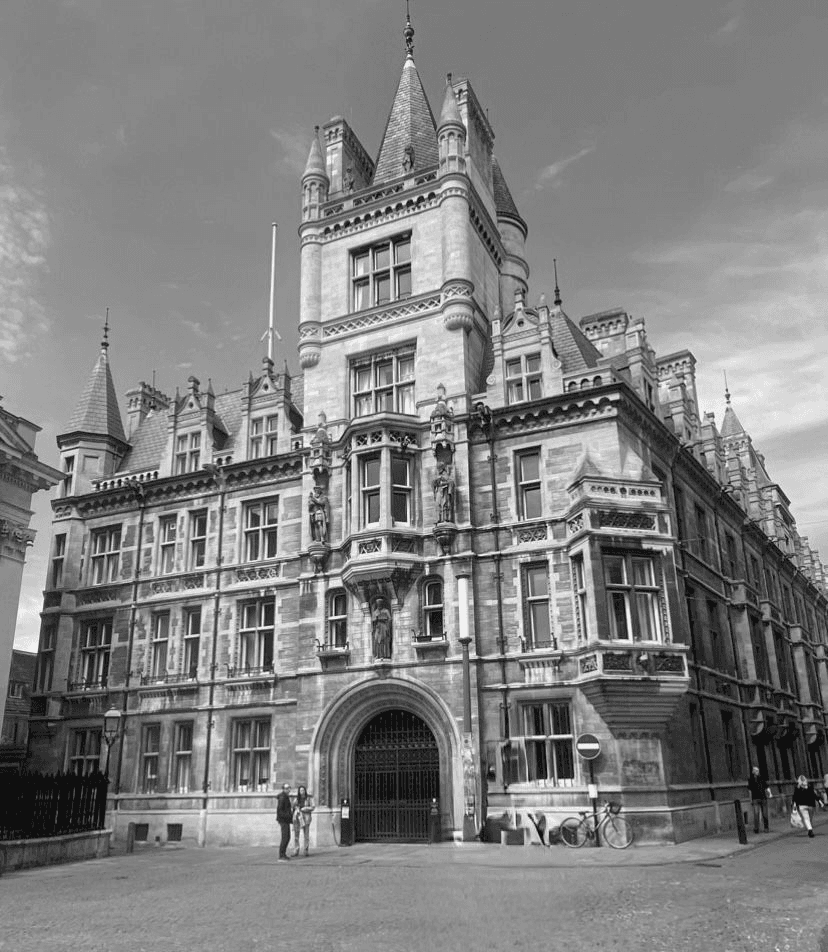

Cambridge A Level Computer Science: The Board We Cover
Cambridge is the board this page covers. Every fact here comes from Cambridge International's own 9618 syllabus.
Cambridge
Cambridge A Level Computer Science is syllabus 9618, four papers of 75 marks, and a practical that is 100 per cent programming.

How Centaurus Helps Cambridge A Level Computer Science Students Excel
Paper 4 Evidence
Program code and testing evidence are prepared together, because both are submitted and both score.
Console Mode
Work is written for Java, Visual Basic .Net or Python in console mode, as the paper requires.
Two Papers, One Topic
Sections 19 and 20 are taught as written theory and as working code, because they are examined both ways.
Artificial Intelligence
Section 18 is the one A Level area with no AS counterpart, so it is taught from the beginning.
Virtual Machines
The abstraction above the hardware is treated as a new idea, not as a revision of hardware.
24/7 Progress Reporting
Families get access to the Centaurus Academy LMS, with attendance, progress and lesson notes available to parents, students and teachers at any time.






Why Centaurus Stands Out
Choosing the right Cambridge A Level Computer Science support makes a real difference. Here is how Centaurus Academy compares with typical online providers.

Meet our Team Of Experts
Our expert tutors bring deep subject knowledge and a passion for teaching — helping every student reach their full potential.


What Parents Say About Us

Hear from the parents and students who have experienced our personalised teaching first-hand.
Excellent long-term experience
We have an excellent long-term experience with the academy and Sir Awais. Our three children studied with them during different periods and succeeded well. We highly recommend the academy.
Excellent academy
Centaurus Academy is truly one of the best educational institutions I've come across. The environment is nurturing, the staff are incredibly dedicated, and the quality of education is outstanding. They focus not only on academic excellence but also on character building and personal growth. The teachers are supportive and go the extra mile to ensure every student feels confident and motivated.
My child has gained confidence
I'm very satisfied with the dedication and teaching approach. My child has gained confidence and improved significantly in understanding math concepts, thanks to the teacher's clear explanations and supportive guidance.



Cambridge A Level Computer Science: Frequently Asked Questions
Explore Tutoring by Country:
Pick your country to see the boards, levels, and subjects our tutors cover near you.




Step Into Your Success
Book a demo lesson today and see how one-on-one tutoring can help your child reach their goals.