



About Cambridge A Level Business Studies
Cambridge A Level Business is syllabus 9609. This page works from the syllabus for exams in 2026, 2027 and 2028, which is version 2 published December 2025. Exams are available in the June and November series, and also in the March series in India.
An A Level candidate sits four papers. Papers 1 and 2 are the AS Level papers and Papers 3 and 4 are the A Level papers. Candidates following an A Level route are eligible for grades A* to E.
Paper 1 is Business Concepts 1. It lasts 1 hour 15 minutes and carries 40 marks. Section A is four short answer questions, with two parts to the first three. Section B is one essay from a choice of two, with two parts to each essay. It is worth 40% of the AS Level and 20% of the A Level.
Paper 2 is Business Concepts 2. It lasts 1 hour 30 minutes and carries 60 marks, and consists of two data response questions with six parts to each question. It is worth 60% of the AS Level and 30% of the A Level.
Paper 3 is Business Decision-Making. It lasts 1 hour 45 minutes and carries 60 marks, and consists of five questions based on a case study. There are three parts to Question 3 and two parts to Question 4, and the rest are single questions. It is worth 30% of the A Level.
Paper 4 is Business Strategy. It lasts 1 hour 15 minutes and carries 40 marks, and consists of two essay questions based on a case study. It is worth 20% of the A Level.
So the AS papers contribute 20% and 30% of the A Level, and the A Level papers contribute 30% and 20%. Papers 2 and 3 are the two heavier papers, and they are the two longest.
Both A Level papers are based on the A Level subject content, and the syllabus states that knowledge of material from the AS Level subject content is assumed.
The first thing to notice about the A Level content is a pattern. Every one of the five functional areas gains a closing topic labelled strategy.
Section 6, business and its environment activity, covers 6.1 external influences on business and 6.2 business strategy.
Section 7, human resource management, covers 7.1 organisational structure, 7.2 business communication, 7.3 leadership, and 7.4 human resource management strategy.
Section 8, marketing, covers 8.1 marketing analysis and 8.2 marketing strategy.
Section 9, operations management, covers 9.1 location and scale, 9.2 quality management, and 9.3 operations strategy.
Section 10, finance and accounting, covers 10.1 financial statements, 10.2 analysis of published accounts, 10.3 investment appraisal, and 10.4 finance and accounting strategy.
So five of the A Level topics are explicitly strategic: business strategy, human resource management strategy, marketing strategy, operations strategy, and finance and accounting strategy. And Paper 4 is called Business Strategy. The subject shifts from learning how each function works to deciding what the whole business should do.
That is the difference a Year 13 student has to feel. An AS answer explains how a marketing mix is built. An A Level answer decides whether the business should change it, weighs the alternatives, and recommends a course of action.
Several other topics are genuinely new technique rather than deeper revision. Organisational structure, business communication and leadership have no direct AS counterpart. So does quality management, location and scale, financial statements, the analysis of published accounts, and investment appraisal.
Investment appraisal is the one to watch. It brings in payback, average rate of return and discounted cash flow, and it appears at neither AS nor in the same depth anywhere else in the AS content.
The assessment objectives make the shift from explanation to judgement measurable. There are four.
AO1 is knowledge and understanding of business concepts, terms and theories. AO2 is application, meaning applying that knowledge to problems and issues in a variety of familiar and unfamiliar business situations and contexts.
AO3 is analysis, covering the use of appropriate methods and techniques to make sense of qualitative and quantitative business information, searching for causes, impacts and consequences, distinguishing between factual evidence and opinion or value judgement, and drawing valid inferences and generalisations.
AO4 is evaluation, covering evaluating evidence in order to make reasoned judgements, presenting substantiated conclusions and, where appropriate, making recommendations for action and implementation.
At AS Level the weightings are AO1 at 30 per cent, AO2 at 30 per cent, AO3 at 20 per cent and AO4 at 20 per cent.
At A Level they become 25 per cent each, all four equal.
That is worth stating plainly because it is unusual. Knowledge and application each give up five percentage points, and analysis and evaluation each gain five. The qualification becomes perfectly balanced, which means a student cannot pass on recall and application alone.
The per-paper splits show where that bites. Paper 1 is AO1 at 35, AO2 at 30, AO3 at 20 and AO4 at 15. Paper 2 is 30, 30, 20 and 20.
Paper 3 is AO1 at 20, AO2 at 27, AO3 at 23 and AO4 at 30. So evaluation alone is worth nearly as much on Paper 3 as knowledge and application together.
Paper 4 is the extreme. AO1 at 15, AO2 at 10, AO3 at 40 and AO4 at 35.
So Paper 4 is 75 per cent analysis and evaluation, with only 10 per cent of its marks for application. A student who writes a beautifully applied answer full of relevant examples but never analyses or reaches a substantiated judgement will lose three quarters of that paper.
Put the other way, one 1 hour 15 minute essay paper worth 20% of the qualification is almost entirely a test of thinking. That is the single most useful fact on this page for a Year 13 student.
The AS content, for reference, is five functional areas: 1.1 enterprise, 1.2 business structure, 1.3 size of business, 1.4 business objectives and 1.5 stakeholders; 2.1 human resource management, 2.2 motivation and 2.3 management; 3.1 the nature of marketing, 3.2 market research and 3.3 the marketing mix; 4.1 the nature of operations, 4.2 inventory management, and 4.3 capacity utilisation and outsourcing; and 5.1 business finance, 5.2 sources of finance, 5.3 forecasting and managing cash flows, 5.4 costs and 5.5 budgets.
The A Level builds on all of it and assumes it. A student who has forgotten capacity utilisation will struggle with operations strategy, because strategy questions ask what to do about the constraint rather than what the constraint is.
There are three routes. Route 1 is AS Level only, taking Papers 1 and 2 in the same exam series. Route 2 is the A Level staged over two years, with Year 1 as the AS Level and Year 2 taking Papers 3 and 4 only. Route 3 is the A Level with all four components in one exam series.
On Route 2, Year 2 is Papers 3 and 4 only, so the AS papers are not retaken. Candidates carry forward their AS Level result, subject to the rules and time limits described in the Cambridge Handbook.
The syllabus is version 2, published December 2025. The amendment for that version was to a weblink, and the syllabus states that textbooks endorsed for the previous version remain suitable.
The qualification is graded A* to E for an A Level candidate. The lower case a to e scale belongs to the AS Level route only.
This page is written for Year 13 students completing the A Level.
Who Cambridge A Level Business 9609 Is For
This course suits Year 13 students sitting Cambridge A Level Business 9609 who can describe how a business works but cannot decide what it should do next and justify the decision.
- Year 13 students sitting Papers 3 and 4, or all four papers in one series
- Students who apply case material but never evaluate it
- Students who have not met investment appraisal or published accounts
- Students writing descriptive answers to strategy questions
- Students aiming for business, management, finance or economics at university

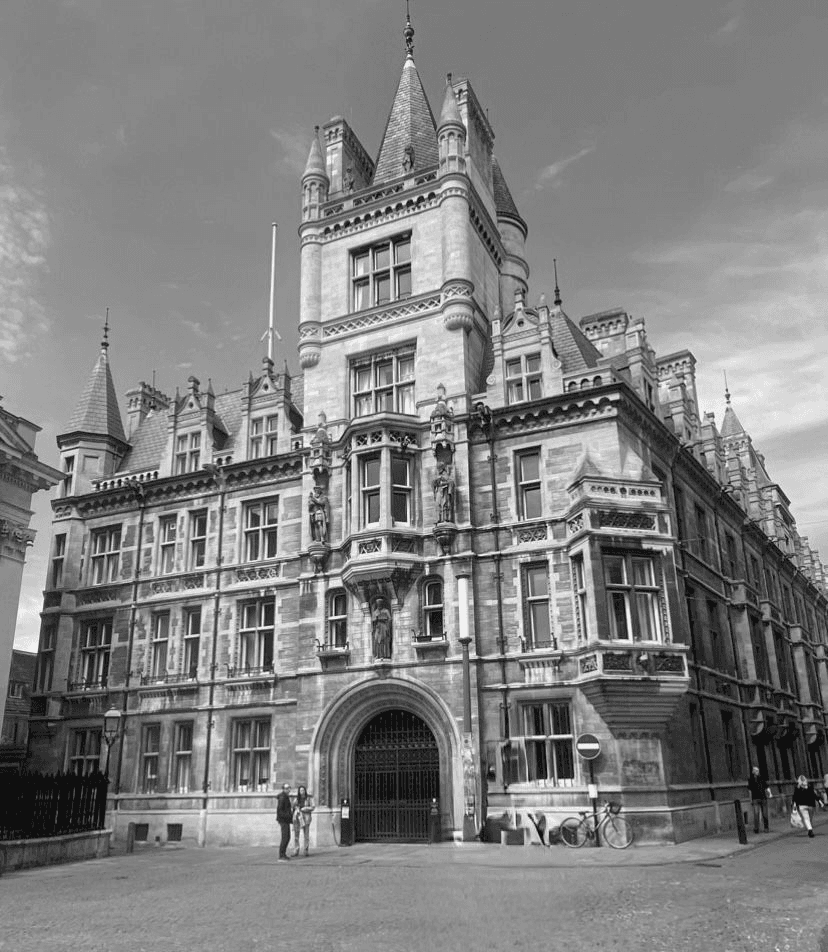

Cambridge A Level Business Studies: The Board We Cover
Cambridge is the board this page covers. Every fact here comes from Cambridge International's own 9609 syllabus.
Cambridge
Cambridge A Level Business is syllabus 9609, four papers, five strategy topics, and a final paper built on analysis and evaluation.

How Centaurus Helps Cambridge A Level Business Students Excel
Strategy Topics
All five strategy topics taught as decisions with trade-offs rather than as summaries of a function.
Paper 4 Judgement
75 per cent of the final paper is analysis and evaluation, so recommendations are written and defended.
Investment Appraisal
Payback, average rate of return and discounted cash flow taught as new A Level technique.
Published Accounts
Financial statements and the analysis of published accounts covered from the accounts themselves.
Case Study Method
Five questions on Paper 3 and two essays on Paper 4, both worked from a case under time pressure.
24/7 Progress Reporting
Families get access to the Centaurus Academy LMS, with attendance, progress and lesson notes available to parents, students and teachers at any time.






Why Centaurus Stands Out
Choosing the right Cambridge A Level Business support makes a real difference. Here is how Centaurus Academy compares with typical online providers.

Meet our Team Of Experts
Our expert tutors bring deep subject knowledge and a passion for teaching — helping every student reach their full potential.


What Parents Say About Us

Hear from the parents and students who have experienced our personalised teaching first-hand.
Excellent long-term experience
We have an excellent long-term experience with the academy and Sir Awais. Our three children studied with them during different periods and succeeded well. We highly recommend the academy.
Excellent academy
Centaurus Academy is truly one of the best educational institutions I've come across. The environment is nurturing, the staff are incredibly dedicated, and the quality of education is outstanding. They focus not only on academic excellence but also on character building and personal growth. The teachers are supportive and go the extra mile to ensure every student feels confident and motivated.
My child has gained confidence
I'm very satisfied with the dedication and teaching approach. My child has gained confidence and improved significantly in understanding math concepts, thanks to the teacher's clear explanations and supportive guidance.



Cambridge A Level Business Studies: Frequently Asked Questions
Explore Tutoring by Country:
Pick your country to see the boards, levels, and subjects our tutors cover near you.




Step Into Your Success
Book a demo lesson today and see how one-on-one tutoring can help your child reach their goals.